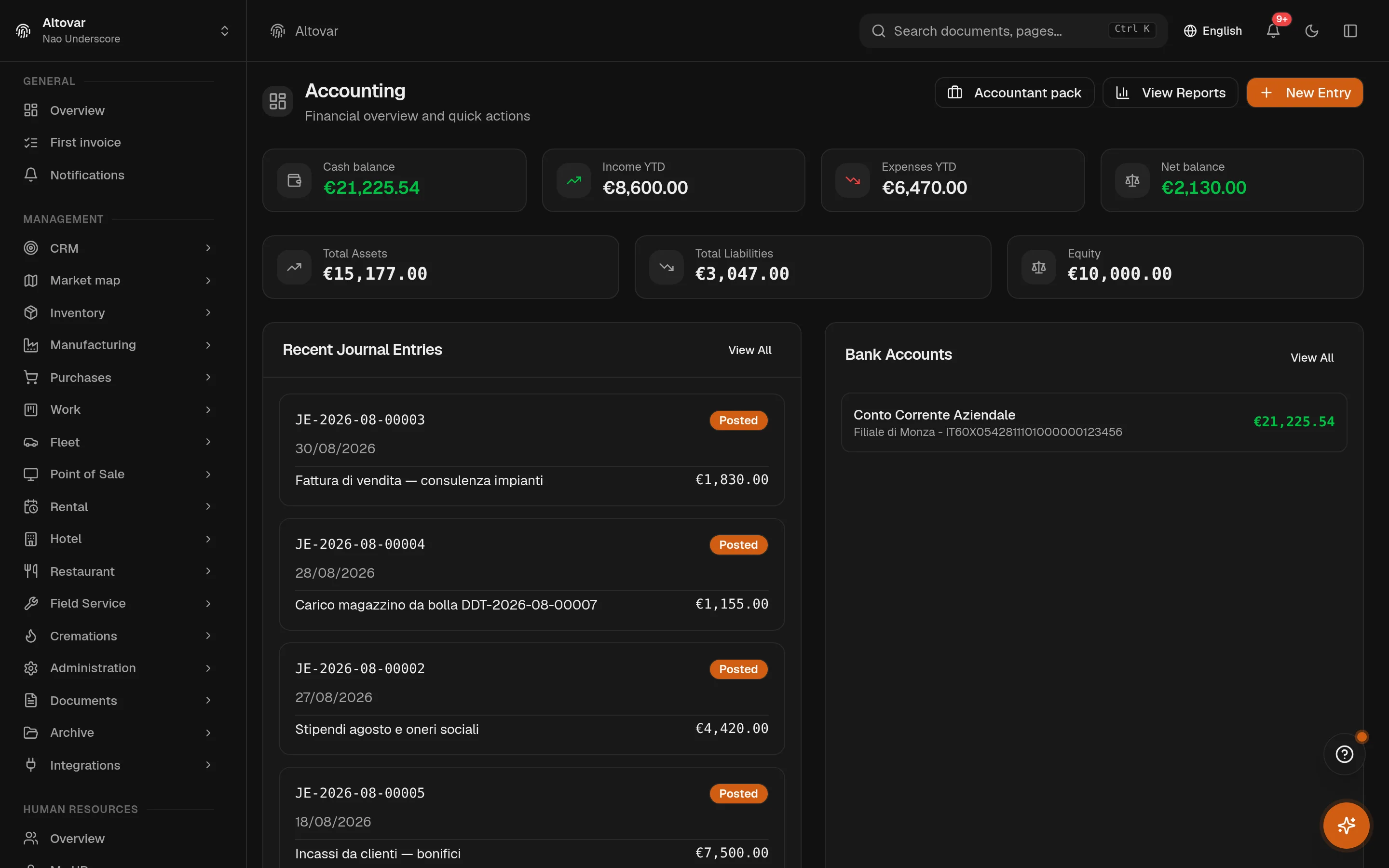
- Double entry
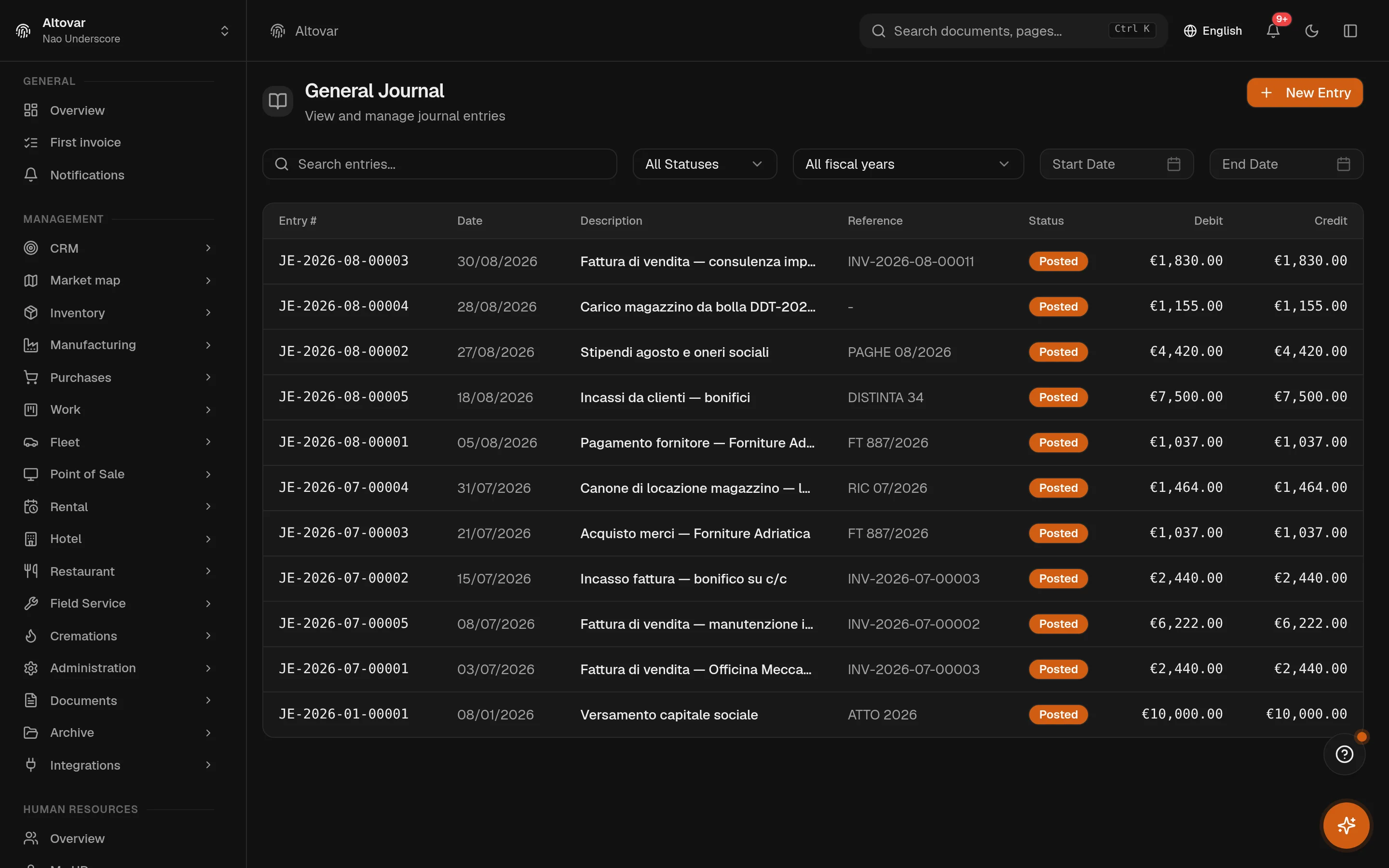
- It must balance a journal entry out of balance by more than 0.001 does not save. The rule lives in the service layer, so no client and no import can sneak past it.
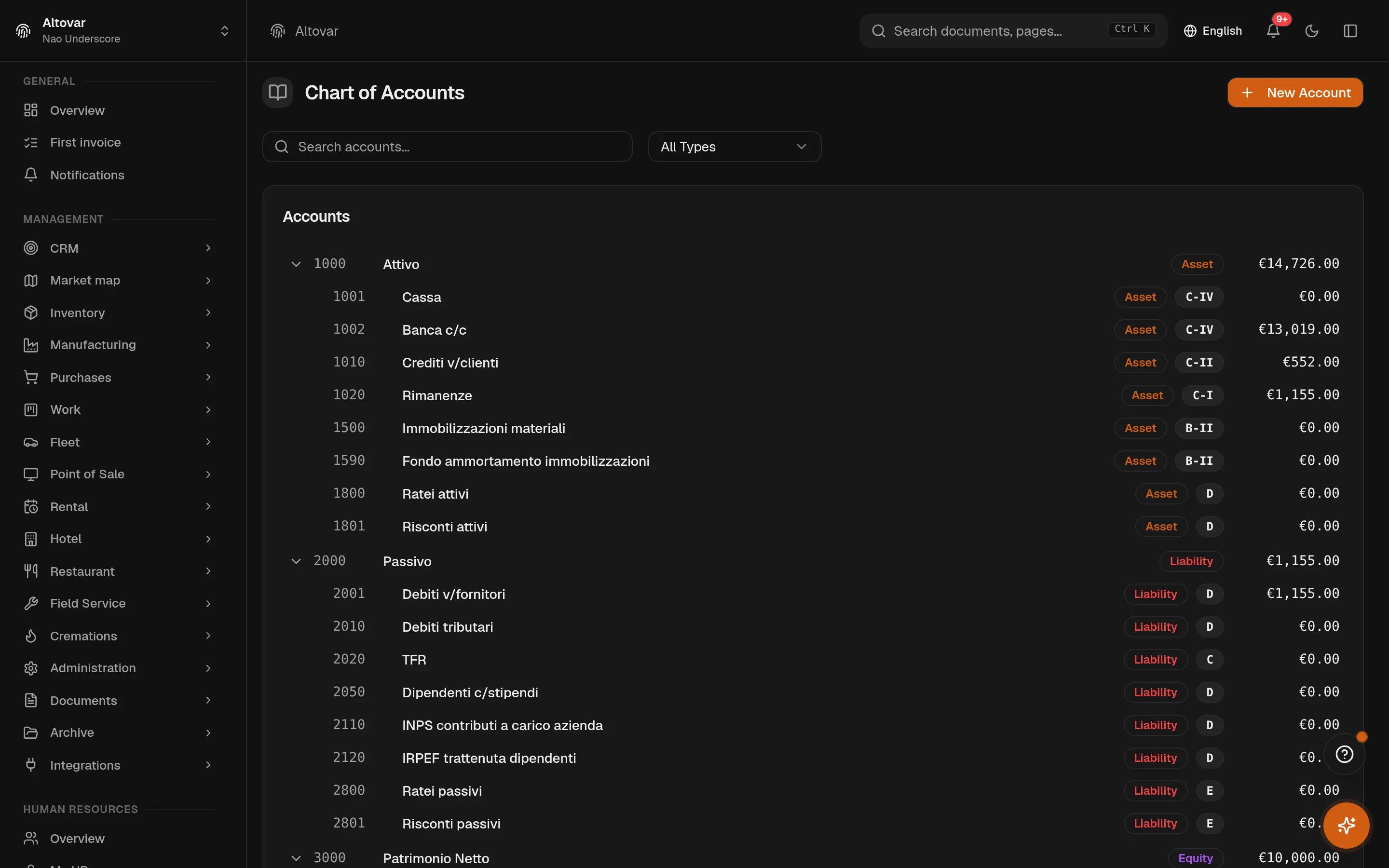
- Chart of accounts
- 40 accounts, seeded an Italian hierarchical chart arrives with the module — cash, banks, receivables, payables, VAT — and each account can carry its statutory statement line.
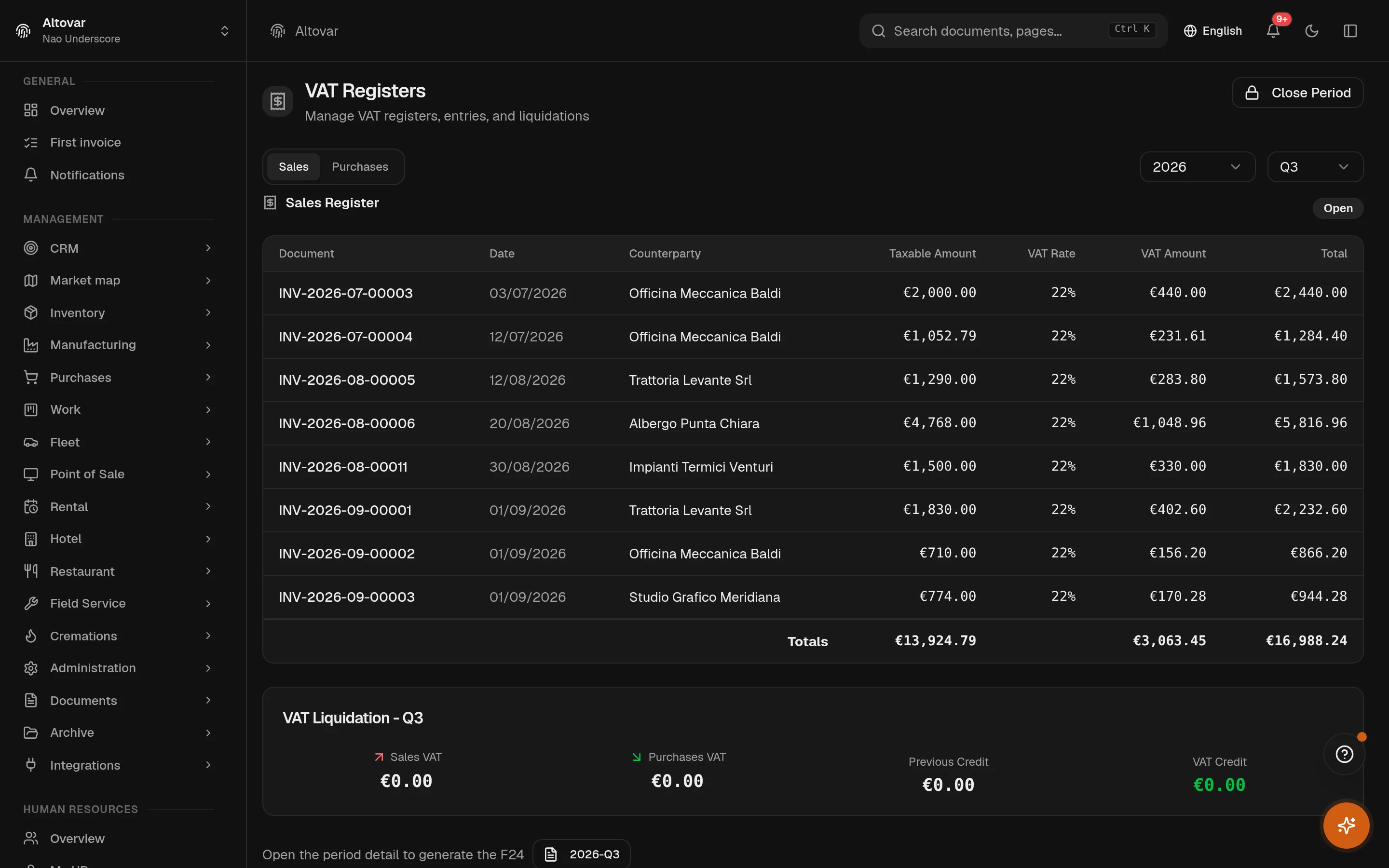
- VAT settlement
- Monthly or quarterly the periodic summary applies the 1% quarterly interest, the €100.00 minimum-payment floor and the 88% year-end advance, with the statute cited next to each rule in the source.
- Depreciation
- Two tracks civil-code and fiscal schedules kept side by side for every asset, with the ministerial coefficient table as the fiscal ceiling and the first-year half rate applied.
All the modules Module 01 / 12
The books, kept like books.
A real double-entry journal, a chart of accounts that maps to the statutory statements, VAT registers that settle themselves into the periodic summary, and a year close that refuses to run until everything is posted. This is accounting as the module the rest of Equinox writes into — not a report bolted on top.
A journal that refuses to be wrong
Registrations are drafted, posted, or voided — and a draft that does not balance never becomes a posted entry. Each line carries its account, debit and credit; the running totals are checked at creation, on every edit, and again at posting. Alongside the journal, a simplified prima nota records plain income and expense movements for the day-to-day that does not need full double entry.
A chart of accounts that knows the statements
The chart is a tree: classes, sub-accounts, codes you control. Forty Italian accounts are seeded on first run so the module works on day one, and every account can be mapped to its line of the statutory balance sheet and income statement — which is what makes the CEE report at the end of the year a reclassification, not a spreadsheet.
- Account ledger
- Open any account and read its posted movements — the partitario, filtered by period, straight from the journal.
- Statutory mapping
- Accounts carry their CEE statement line; the unmapped ones are shown, deliberately, as the signal that the statement does not yet reconcile.
VAT, from registers to settlement
Sales and purchase registers are fed by the documents themselves — issued invoices on one side, received electronic invoices on the other. The periodic settlement reads them by month or quarter and applies the fiscal rules as written: quarterly interest, the minimum-payment floor, the year-end advance on the historical method. The annual declaration view assembles the VL to VX frames from the same registers.
A year you can actually close
Fiscal years are first-class: open, closed, locked. The close blocks while draft registrations exist, then generates the closing entries for revenue and cost accounts itself, balancing the result into the profit-and-loss account — and refuses to finish if the maths does not hold. Accruals, deferrals and inventory valuations post their reversals into the new year.
- Assets, on two tracks
- Each asset holds a civil-code schedule and a fiscal one, computed per year — constant quotas pro-rated by month on one side, the ministerial coefficient as ceiling on the other.
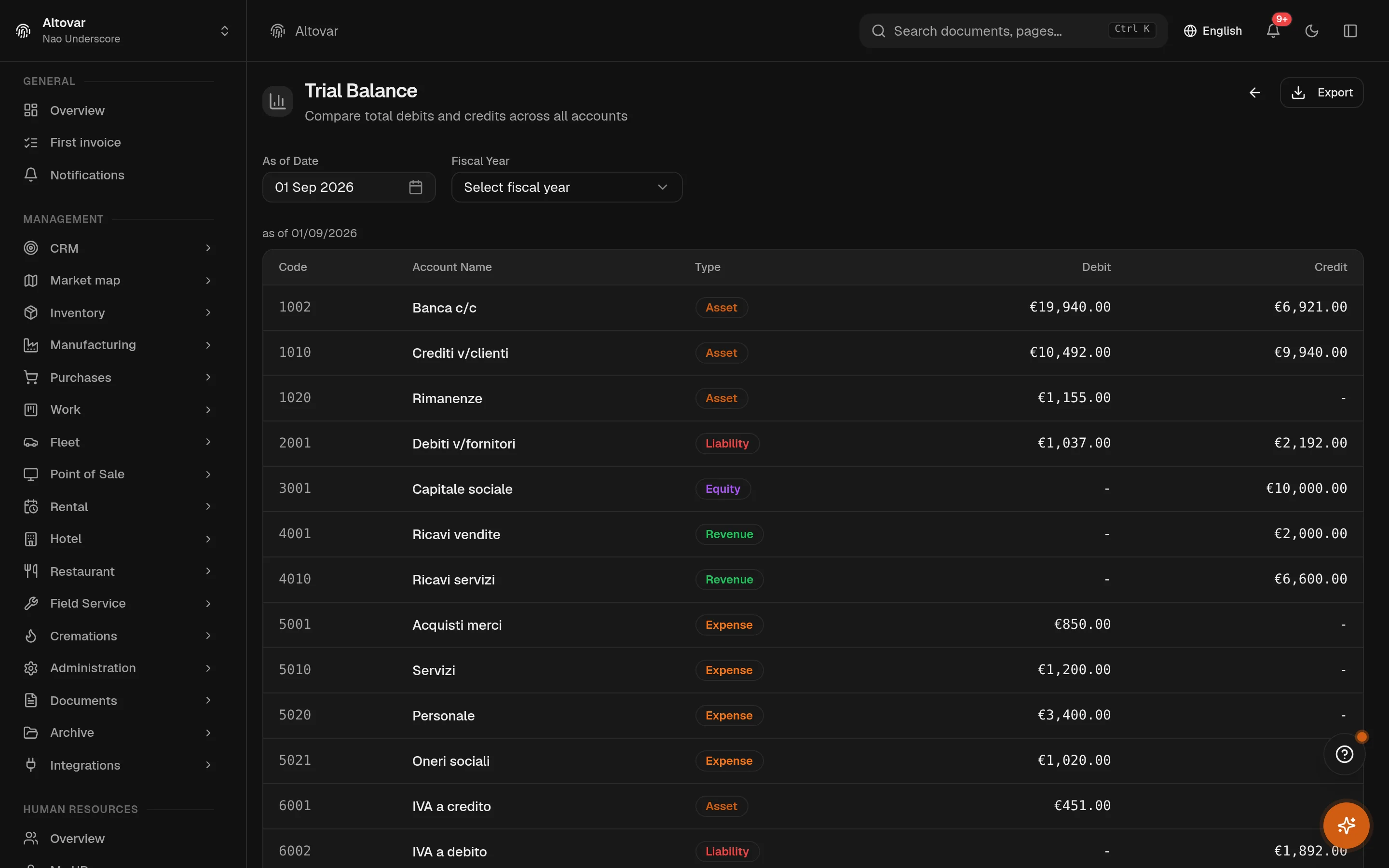
- Four reports
- Balance sheet, income statement, trial balance, and the statutory CEE layout with the prior-year column and a PDF export.
Bring the books in.
Tell us how your accounting runs today — who posts, who closes, what the accountant needs at year end. We will show you the module on data like yours, and be straight about what it does not do.