- Order lifecycle
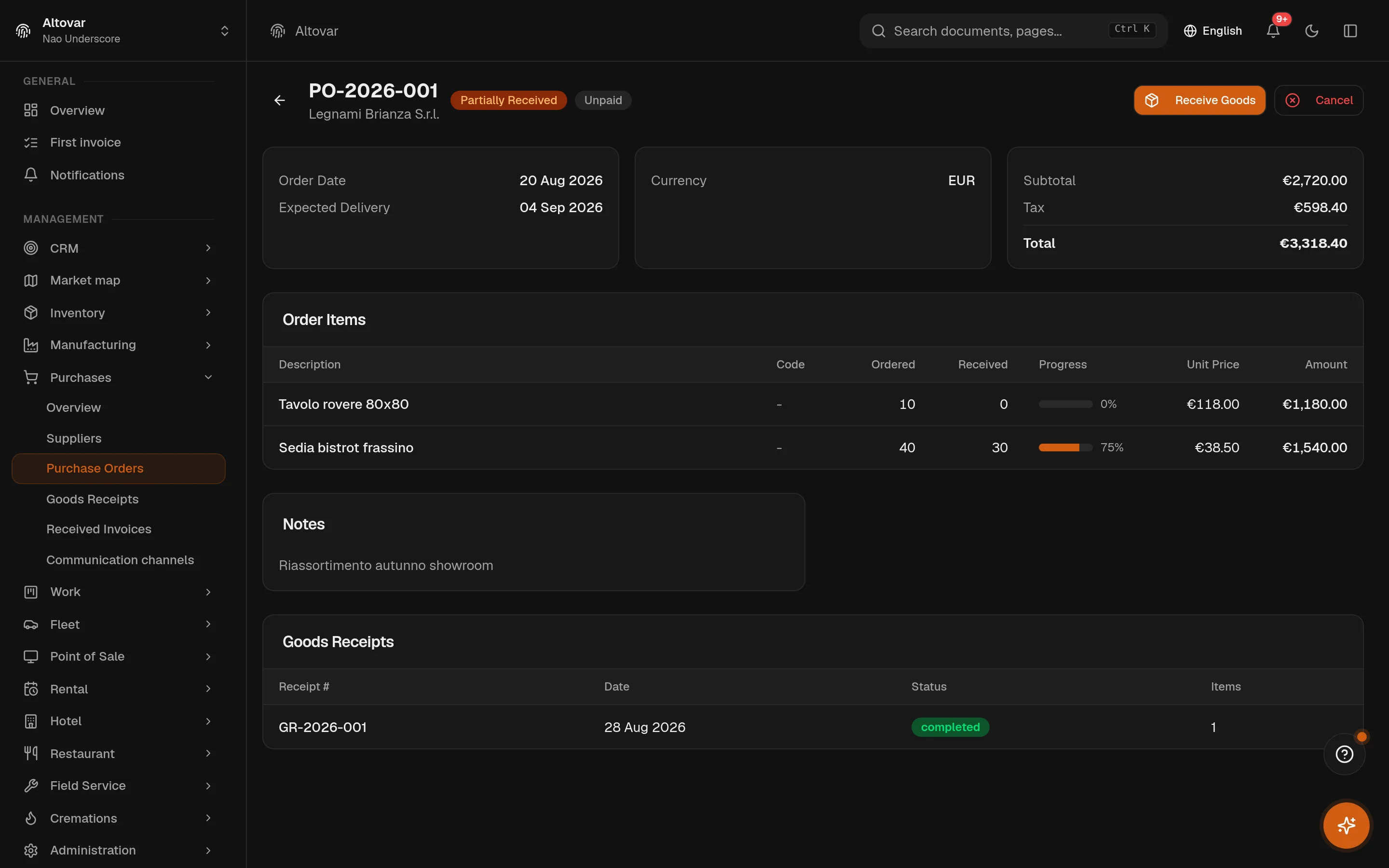
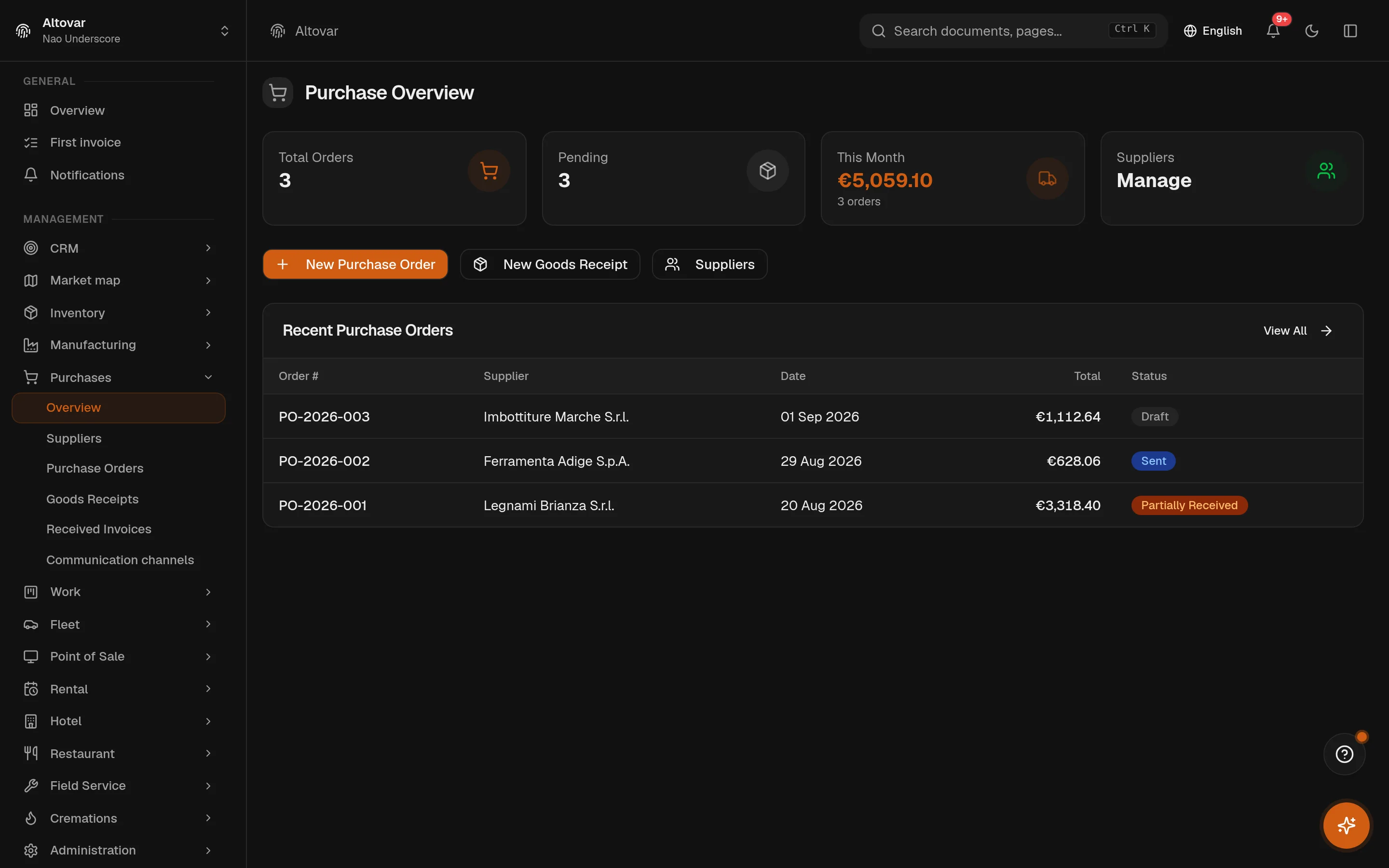
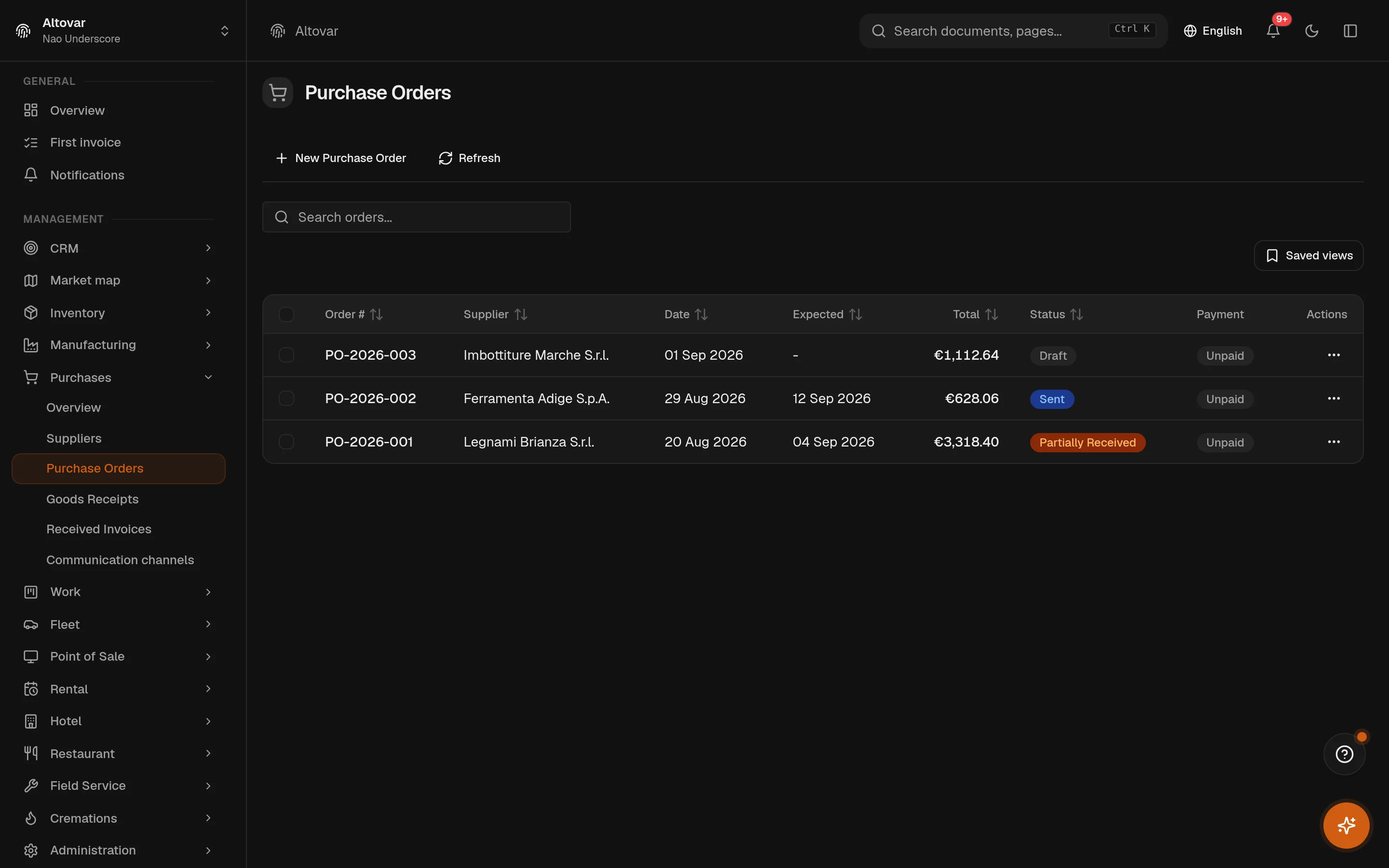
- 6 states, enforced draft, sent, confirmed, partially received, received, cancelled. The transitions live in the service layer and refuse to skip a step — an order cannot be received before it is confirmed.
- Receiving
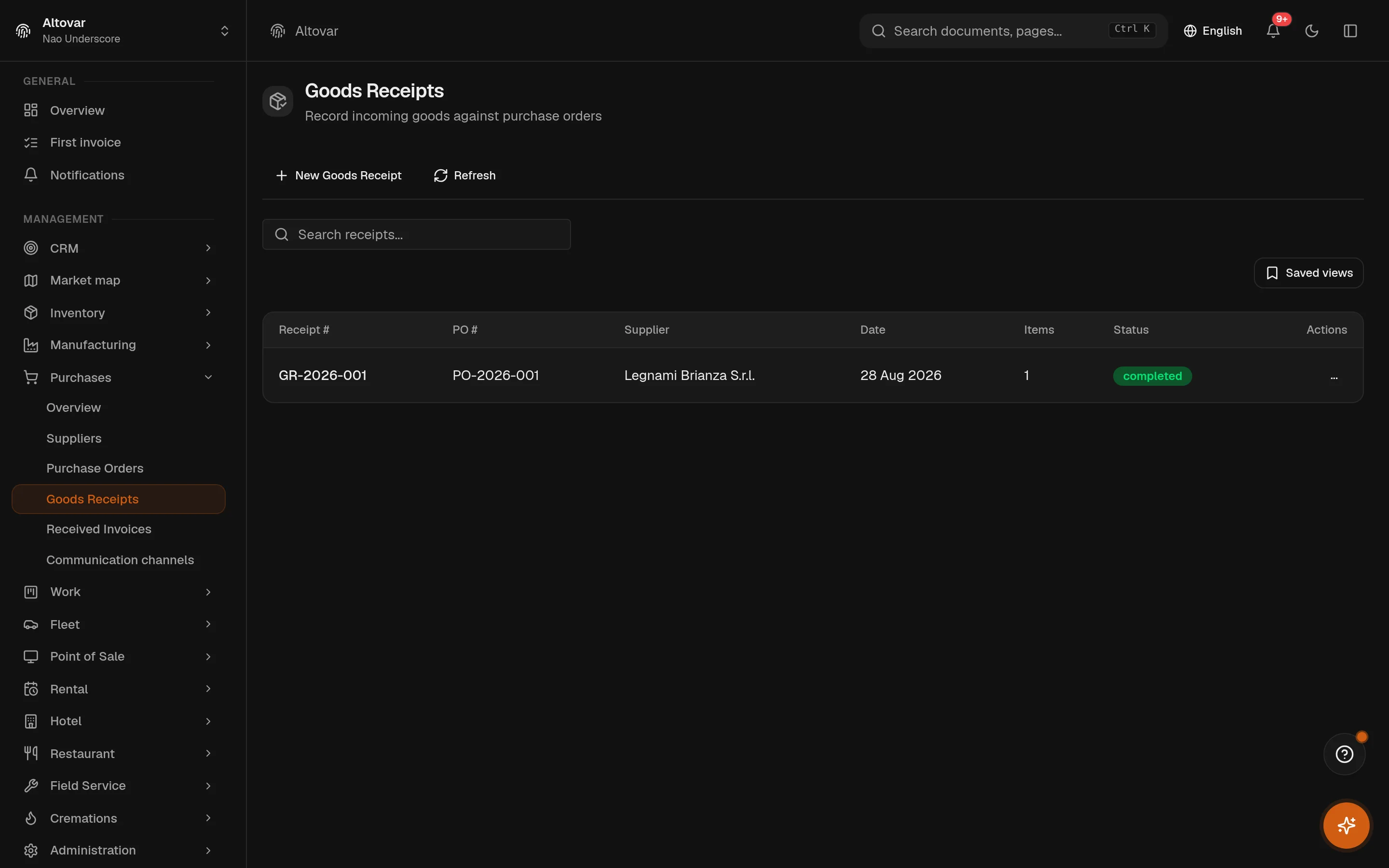
- Partial, by design several receipts can land on one order. Every line is checked against the remaining quantity, and the order turns received only when each line is complete — until then it is partially received, and says so.
- Passive invoices
- Two roads in supplier invoices typed in by hand, or electronic invoices arriving from the SDI exchange system as immutable envelopes. Booking learns the expense account per supplier after the first manual posting.
- Quality
- Inspected, not blocked inbound inspections on receipts with sample size, passed and rejected quantities and a disposition — accept, reject, quarantine, return, scrap. An audit trail by design: it never silently moves your stock.
All the modules Module 06 / 12
Ordered, received, accounted.
A purchase starts as a document and stays one: an order with numbered lines, a state machine that refuses to skip steps, receipts that can land in instalments, and invoices — typed in or arriving electronically — that end up booked against the right accounts. Each step leaves the previous one visible, so you can always answer what was ordered, what actually arrived, and what it cost.
Orders that keep their word
An order carries its supplier, expected date, destination warehouse and numbered lines with quantities, prices, VAT and discounts. It moves through its states one at a time — and each line shows ordered against received, as a progress bar, for as long as the order lives. Orders can also be born from the warehouse: the replenishment automation drafts them from reorder points, within a spending ceiling.
Receiving that tolerates reality
Deliveries rarely match the order on the first truck. A receipt takes what actually arrived — thirty chairs of the forty ordered — checks it against what is still open, and on completion moves the stock into the chosen warehouse and updates the order line by line. The accounting entry for the received value, shipping apportioned across lines, is attempted in the same motion; if posting fails, the receipt stands and the books tell you what is missing.
A paper trail for every pallet
Receipts are documents with their own numbering, tied to their order and warehouse. Each can carry inbound quality inspections — sample size, how many passed, how many were rejected, and what happens next, from accept to scrap. The inspection is an audit record on the receipt: it documents the decision without ever touching quantities behind your back.
Suppliers with a memory
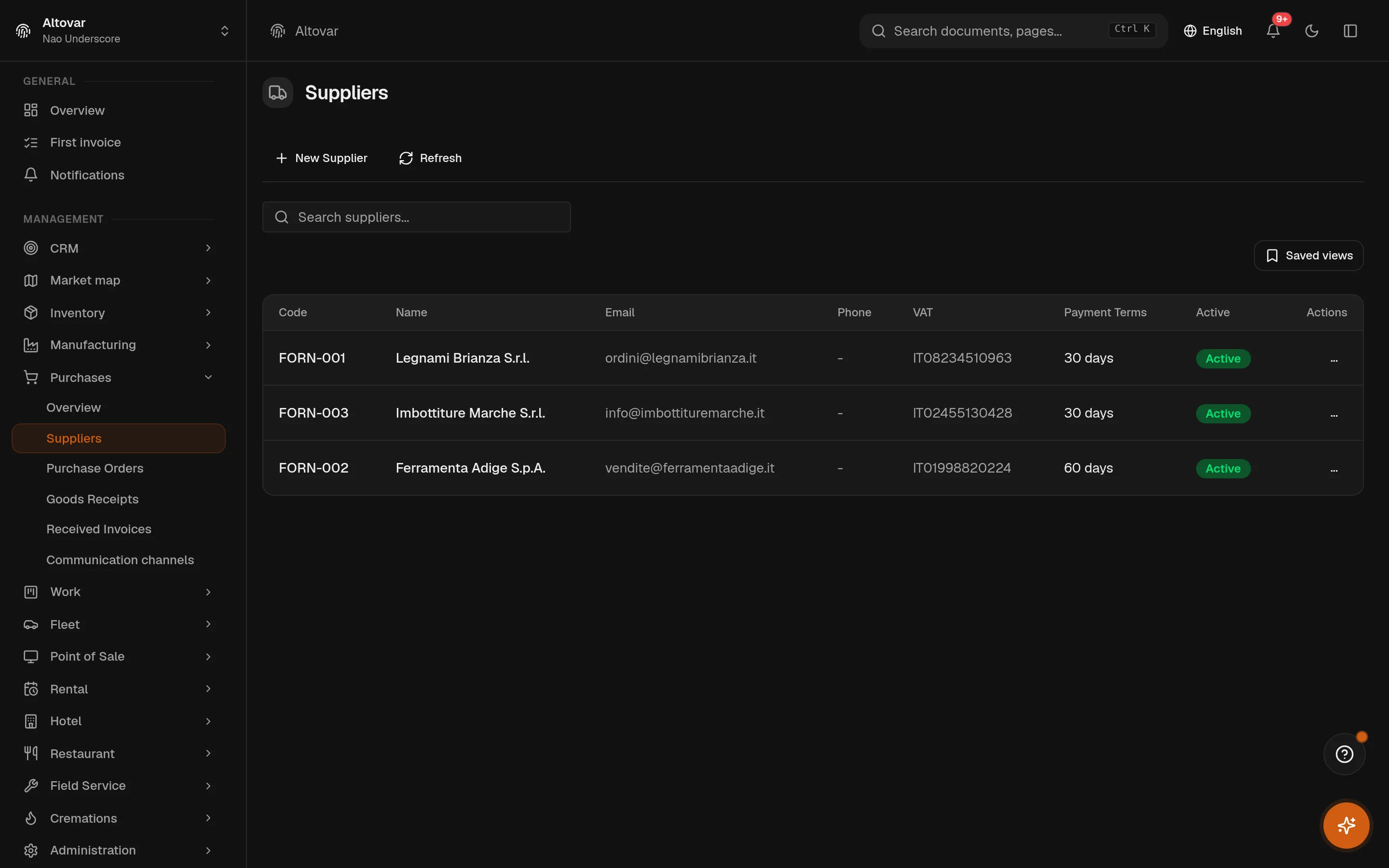
A supplier record holds the fiscal data — VAT number, tax code, SDI code, PEC — payment terms, bank details, and the full trail of orders and invoices. Next to it, a communications hub: a procurement mailbox and WhatsApp channels, with conversations filed per supplier, so the quote you were promised by Thursday is in the record, not in someone’s inbox.
Invoices that book themselves in, eventually
Supplier invoices move through six states, from draft to paid, with payments recorded per invoice. Electronic passive invoices arrive from the SDI exchange system as immutable envelopes — you book one to the ledger by picking the expense account once, and the module remembers the choice for that supplier. The next invoice from the same supplier proposes its own booking. Orders and invoices link by reference; the comparison stays yours.
Put an order through it.
Tell us how buying works today — who orders, who signs for the truck, where the invoices pile up. We will show the module on data like yours, and tell you plainly what it does not do.