- Pipelines
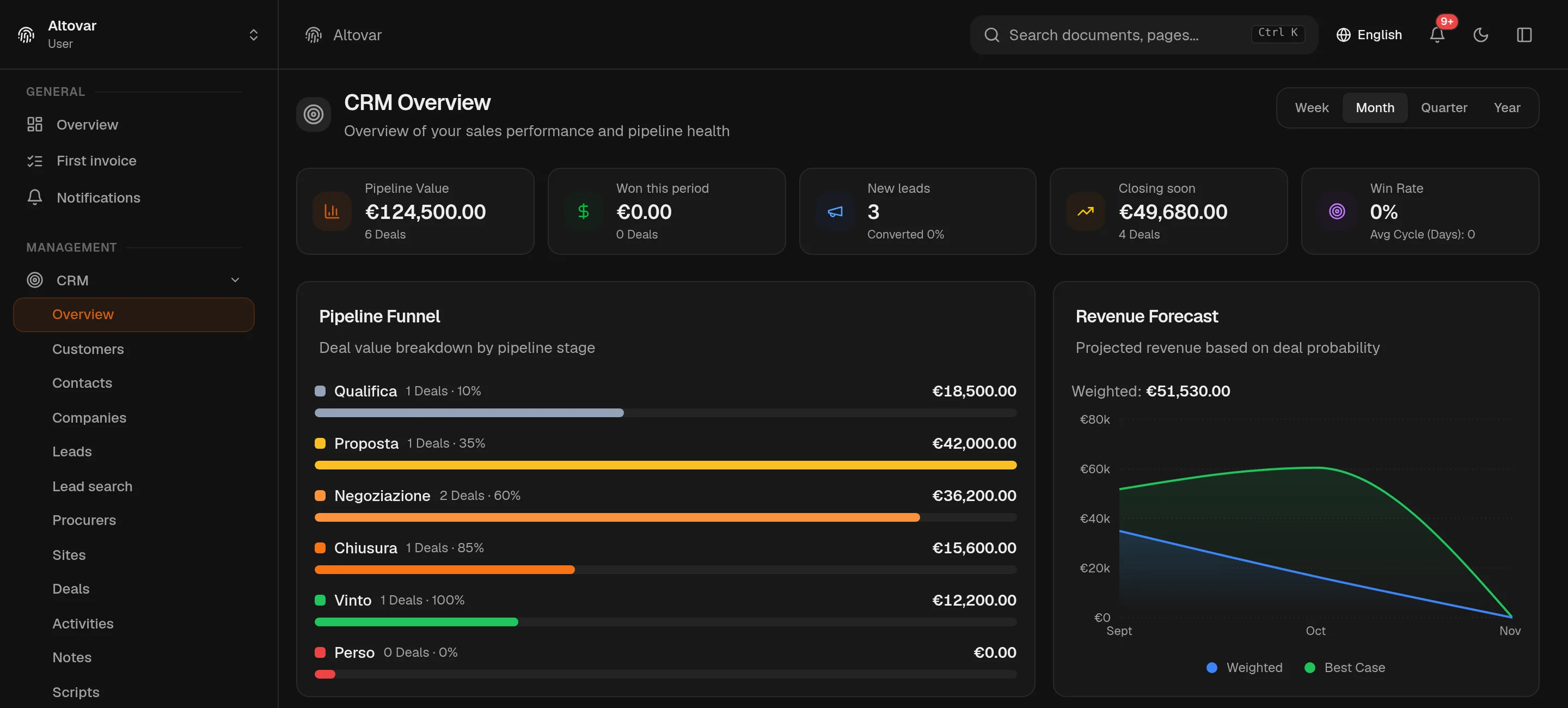
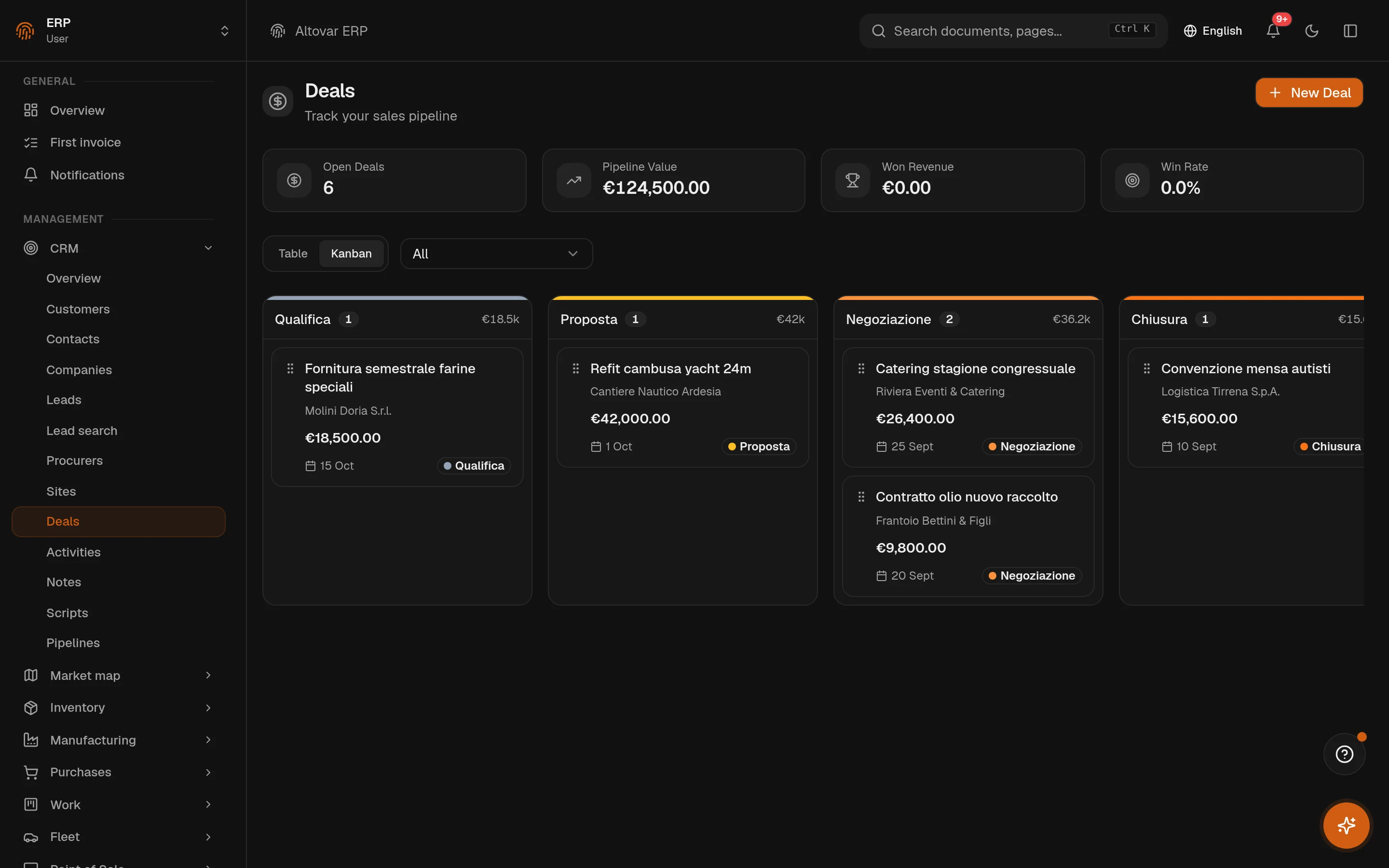
- Stages you shape each pipeline has at least two stages and every stage carries its own probability from 0 to 100. Won and lost are explicit stages, so the forecast reads the board instead of guessing.
- Lead score
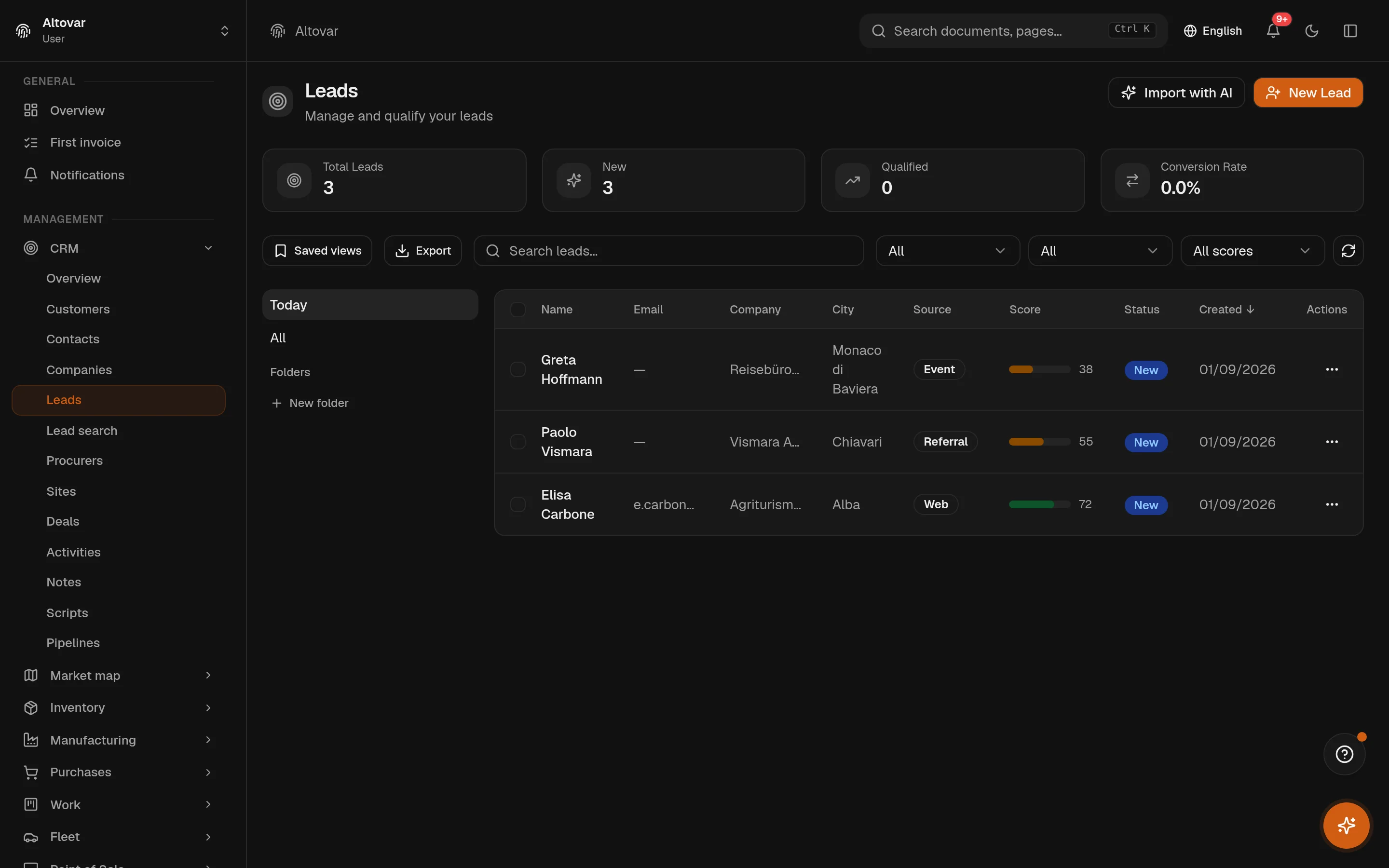
- 0 to 100 every lead carries a source and a score. Converting it creates the contact, the company and the deal in one step, and the origin stays on the record.
- Activities
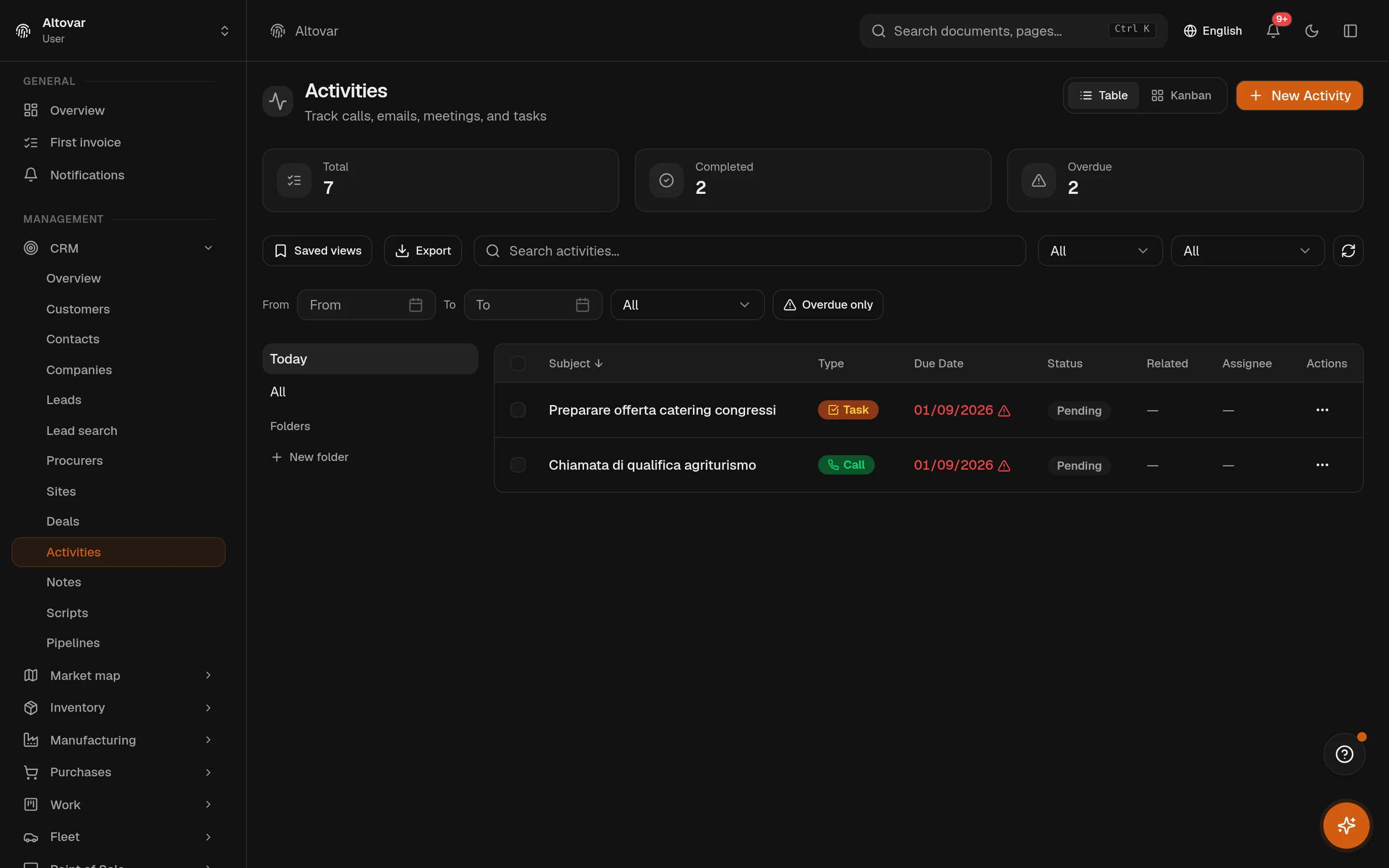
- 5 kinds call, email, meeting, task and note — each with a due date and a reminder, and a bridge to the calendar that carries duration, recurrence and invitees.
- Stuck deals
- Flagged after 5 days a scheduled check raises an event for every open deal that has not moved in five days, so a stalled negotiation is a signal, not a discovery at quarter end.
All the modules Module 07 / 12
The CRM inside the ERP.
Leads, companies and deals live next to invoices and stock. Nothing to sync and nothing to export: the person you are selling to and the person who owes you money are the same record. Pipelines are yours to shape, every stage carries its probability, and the forecast is computed from the board — not typed into it.
Deals on a board you can drag
Every deal carries a value, a currency, a company, the contacts involved and an expected close date. Table and Kanban are the same list seen two ways: drag a card between stages and the deal's probability follows the stage. Saved views and export live on the same toolbar.
- Weighted forecast
- The overview multiplies each open deal by the probability of its stage and plots the total against the best case, month by month.
- Companies and contacts
- A company holds industry, size and address; contacts hang off it; a deal links both. Custom fields extend all three and can be reordered or restored.
Leads with a score, not a hunch
A lead arrives with a source — web, referral, event — and a score from 0 to 100. The list filters by both. When the lead is ready you convert it: contact, company and deal are created together and nothing is retyped. Import reads your spreadsheets and cards, proposes the field mapping with AI, and only commits when you confirm.
- Classification
- Leads can be classified one at a time or in batch, and prospecting campaigns feed new records into the same list.
- Folders and views
- Group leads into folders, save the filters you keep coming back to, export the list when someone outside the system needs it.
Calls, meetings, tasks — on the calendar too
Five kinds of activities, each linked to the deal, company, contact or lead it belongs to. Due dates raise reminders; an activity with a duration, a place and invitees is mirrored on the calendar as an event. Completing an activity stamps the time, so the activity metrics per operator are counts, not estimates.
- Call scripts
- Scripts are drafted, then published. A phone session runs on a script and ends completed or abandoned; the statistics per script are built from those endings.
- Notes and comments
- Notes attach to any record; comments thread under them. Attachments live on the lead or the deal, not in someone's inbox.
What it deliberately is not
There is no connector that mirrors a third-party CRM in real time: data comes in through import, prospecting and the forms of the ERP itself. The 'sites' area builds prospecting pages for your campaigns; it is not a website builder for your customers. If your sales process needs something this module does not do, we would rather say so before you sign.
Bring the pipeline in.
Tell us how you sell today — where leads come from, who follows them, what a closed deal has to trigger. We will show you the module on data like yours, and be straight about what it does not do.