- Waste, per line
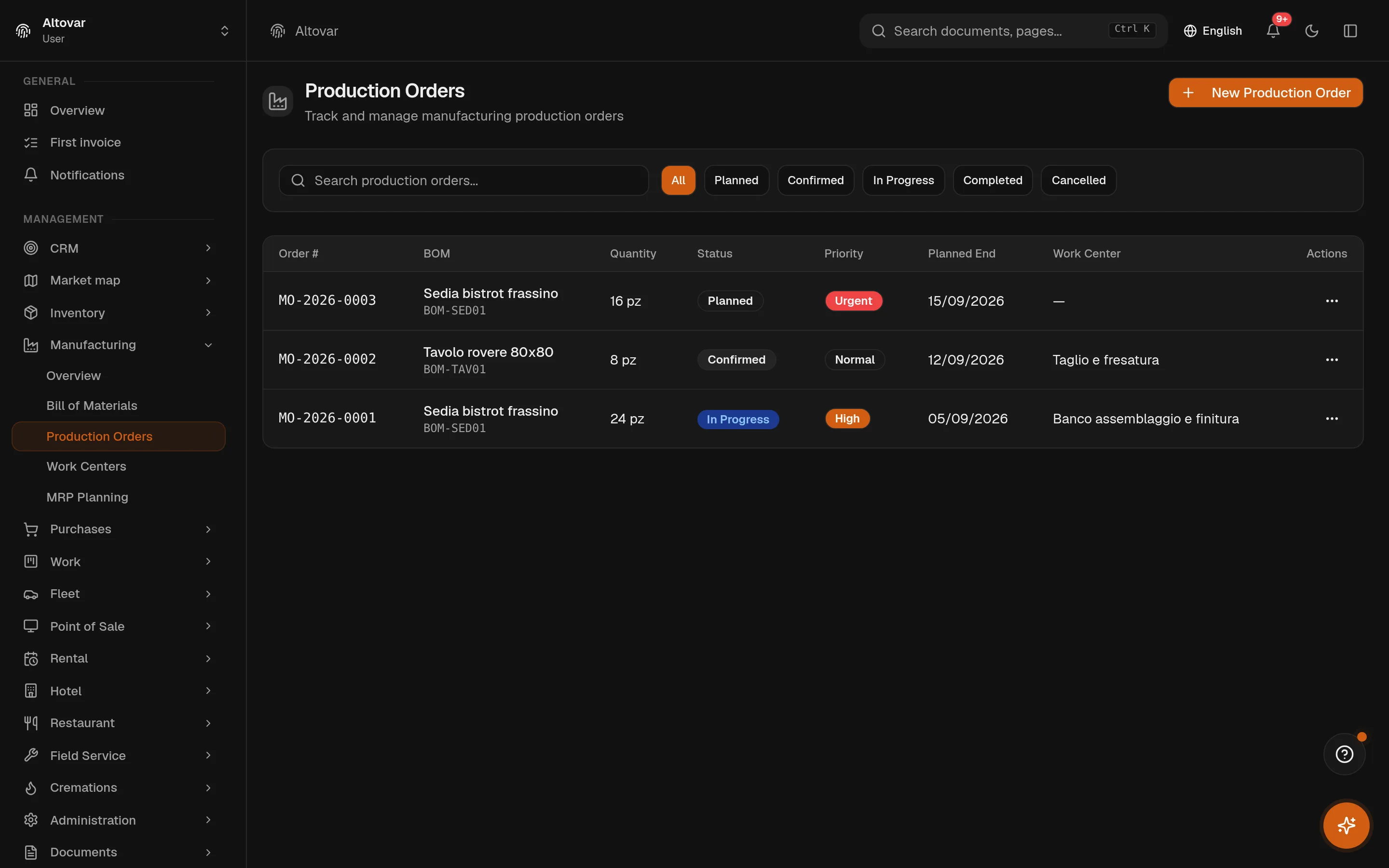
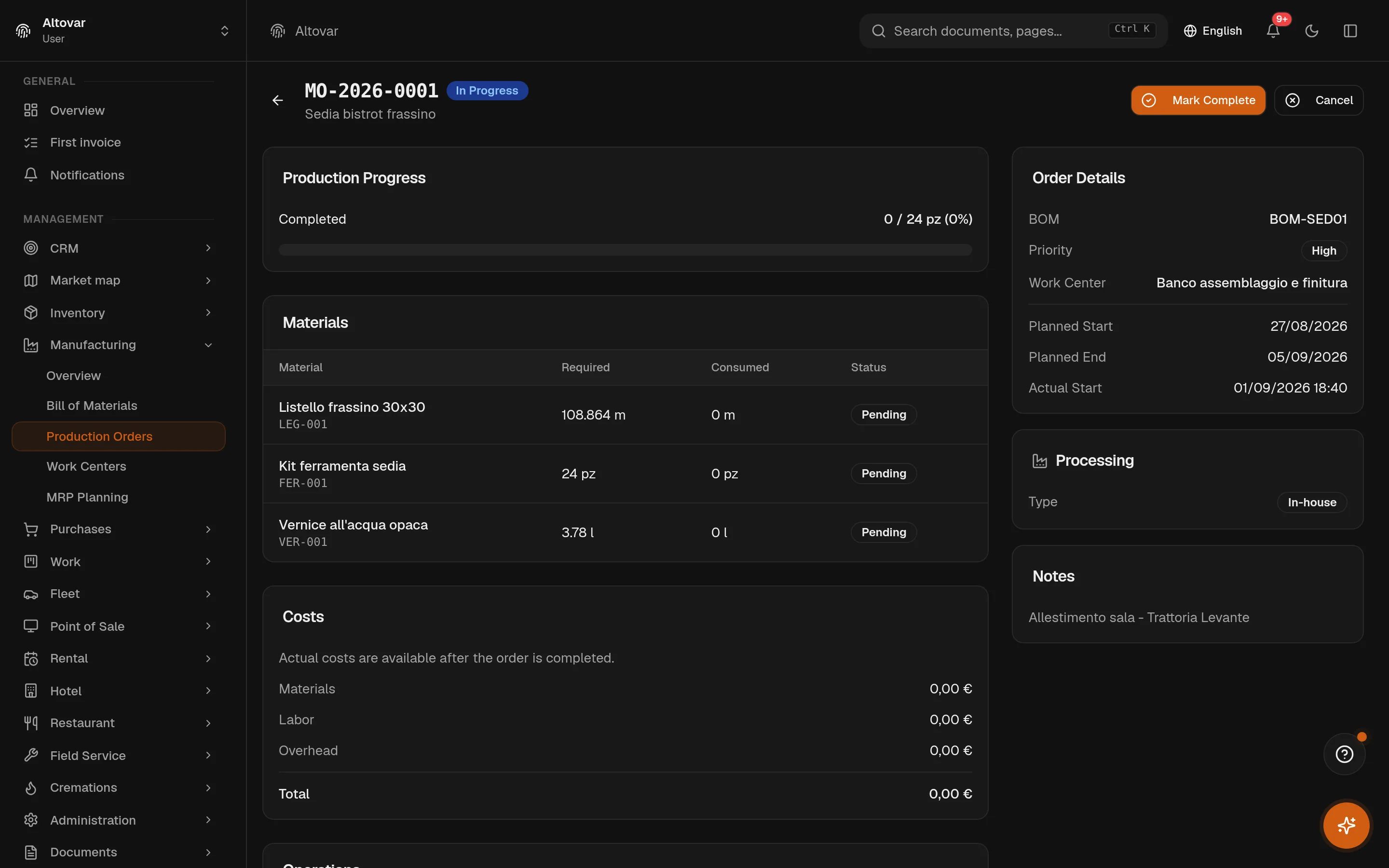
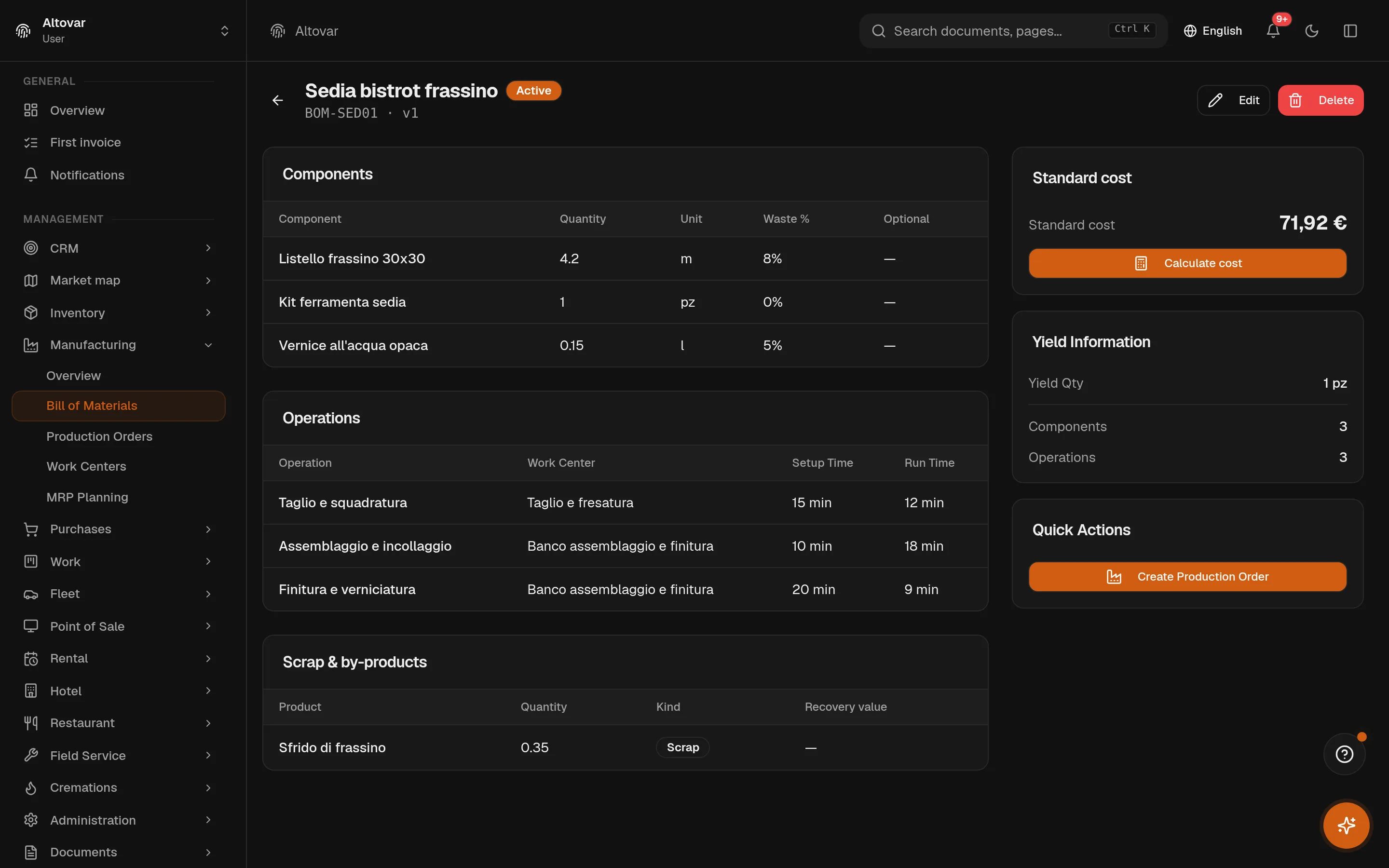
- On every component each bill line carries its own waste percentage, and the order maths it in: the 24 demo chairs ask for 108.86 m of ash strip, not the 100.80 a naive multiplication would give.
- Standard cost
- €71.92 what the demo bistro chair computes to — components plus operation minutes at the work-center hourly rate. One click writes it to the product; nobody types it.
- Order lifecycle
- 5 states planned, confirmed, in progress, completed, cancelled — and the transitions between them are enforced by the server, not by discipline.
- Real stock
- Moves on completion finishing an order consumes the components at their real cost, receives the finished goods, and books valued by-products back in — as stock movements, not notes.
All the modules Module 10 / 12
A bill of materials that knows what a piece costs.
A bill of materials in Equinox is not a shopping list. Every component carries its waste share, every operation its setup and cycle minutes on a work center with an hourly cost, every offcut its recovery value. The standard cost you quote from is computed, not guessed — and the order that follows moves real stock.
The whole bill, on one page
Components with quantity, unit and waste share. Operations with setup and cycle minutes, each on its work center with an hourly cost. Scraps and by-products declared next to what produces them. The bill is versioned, has a yield, and can be flipped between draft, active and obsolete — so the shop floor always knows which one counts.
- By-products with a value
- An offcut can be waste, or it can be worth something: give it a recovery value and completion books it into stock — and subtracts it from the cost of the finished piece.
- Cost, computed
- One click rolls the bill up into a standard cost on the product itself: components at cost price, operations at minutes times the work-center rate.
From order to pieces
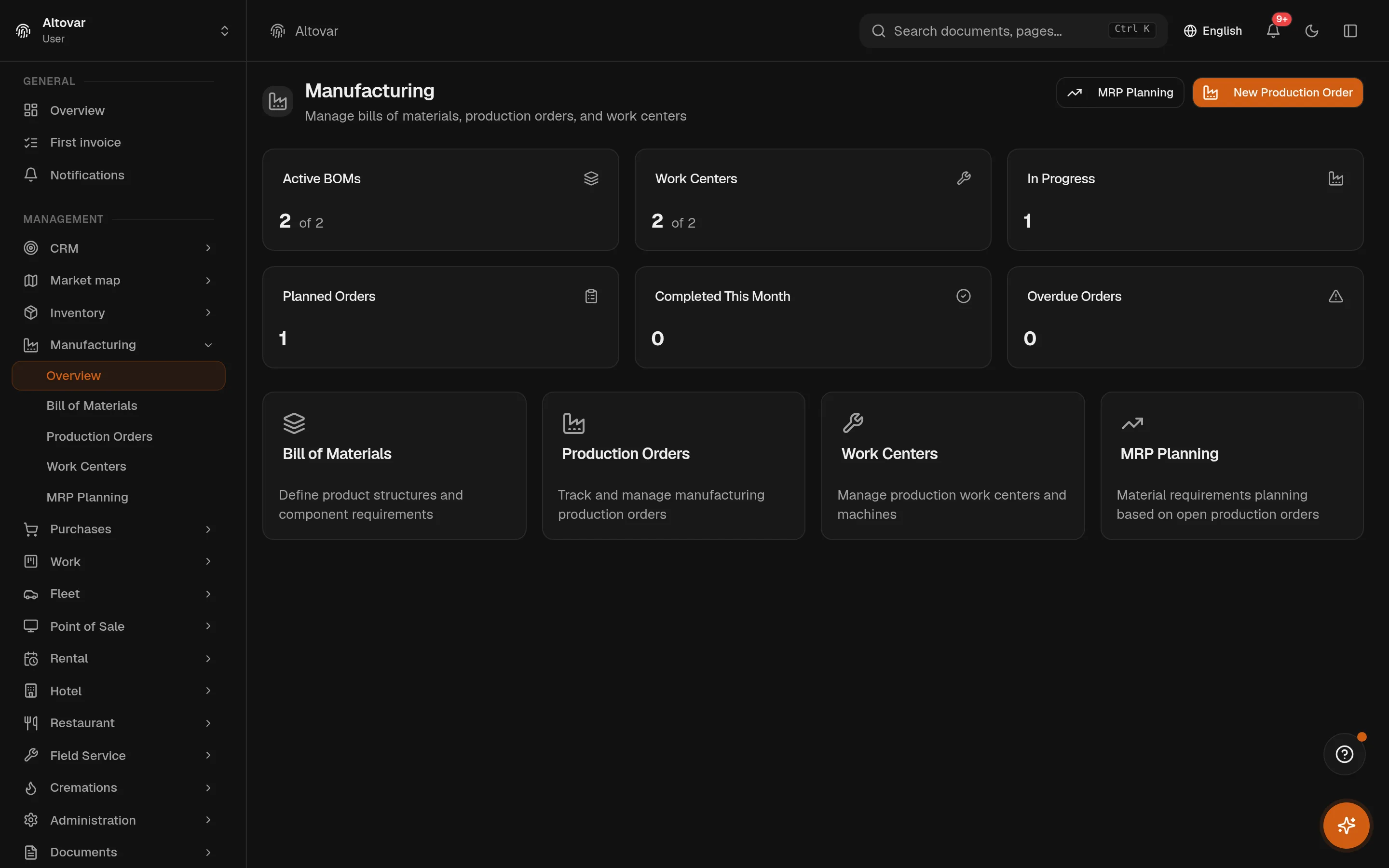
A production order starts from a bill and a quantity, and the components explode themselves — waste included. It moves planned, confirmed, in progress, completed; each step is a server-checked transition, cancellation is allowed any time before the end, and only untouched planned orders can be deleted. Priorities and planned dates keep the list honest about what is late.
The order, while it runs
Open a running order and you see the progress bar, the exploded materials with their reserved and consumed state, the planned dates against the actual start, and the time logged on each operation. Actual costs stay honestly empty until completion — the page says so — because Equinox records what happened, not what should have.
- In-house or subcontracted
- An order can be worked internally or sent out: the subcontract variant carries its supplier and its agreed cost instead of internal labor.
- Time, logged
- Minutes are logged per operation on the order — by duration or start and end — and become the labor side of the final cost.
Completion is an event, not a checkbox
When an order completes, things happen: the components are consumed from stock at their real cost — layer by layer where the product is costed that way — the finished goods are received, valued by-products come back in and lower the cost of what you built, and the order keeps its material, labor and overhead totals. The warehouse and the books hear about it without anyone retyping anything.
Put production on the books.
Tell us what you build and how you cost it today. We will show you the module on a bill like yours — waste, minutes and all — and be straight about what it does not do.