- Reports
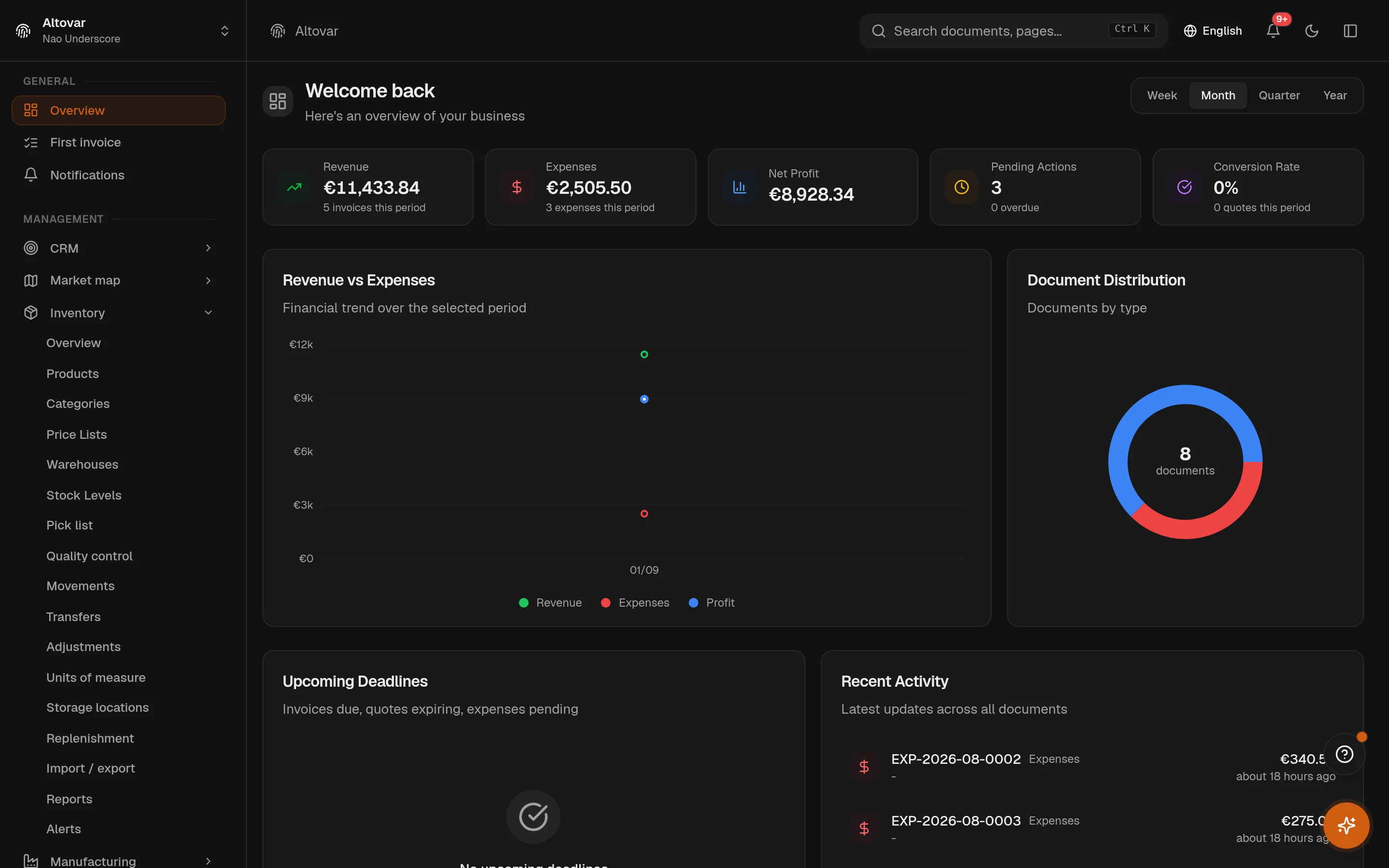
- 7 built in valuation, dead stock, movements, ABC, forecast, supply and anomalies — each a tab on the reports page, each reading the live movement ledger, not a nightly copy.
- Reorder
- Thresholds, then automation products at or under their reorder point, ranked by deficit × lead time. Automation has four steps — suggest, draft orders, autonomous agent, hands-off — gated by a daily spending ceiling and an explicit sign-off before the last one.
- Locations
- Bins, on a map zone, aisle, rack and level per bin, with barcode and capacity, drawn on the warehouse floor plan. Per-bin quantities are kept as a satellite ledger you can move between bins and reconcile against the totals.
- Import & export
- CSV, both ways products and stock counts, in and out, files up to 5 MB. The AI extraction reads free text, CSV or PDF documents — scanned PDFs included; a photo alone is not supported, and nothing is written without your confirm.
All the modules Module 05 / 12
Stock that answers questions.
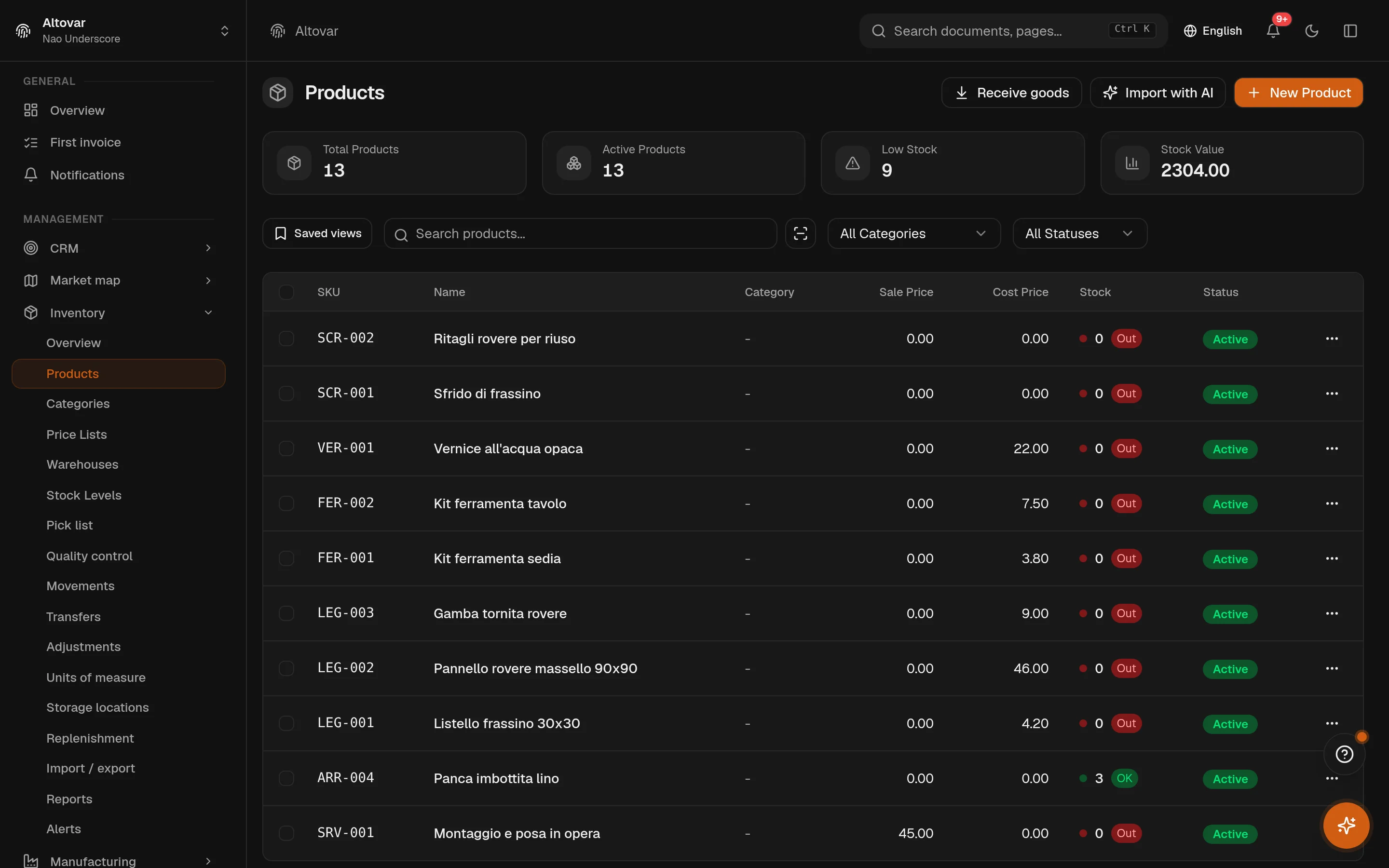
How much is there, where exactly, and since when. The warehouse module keeps quantities per warehouse and per bin, writes a movement for everything that changes them, and turns thresholds into a reorder list ordered by urgency — with automation you can raise from suggestions to hands-off, behind a spending ceiling. Seven reports read the same live data your team works on.
Products that carry their logistics
A product is more than a price: barcode (the module can generate a valid EAN-13 for in-store use, check digit included), alternative codes, variants with their own SKUs, lots with shelf life, alternative units of measure with conversion factors, weight and dimensions, and the reorder parameters — minimum, reorder point, reorder quantity, lead time. The camera scanner works from the browser, for search and for data entry.
Quantities you can point at
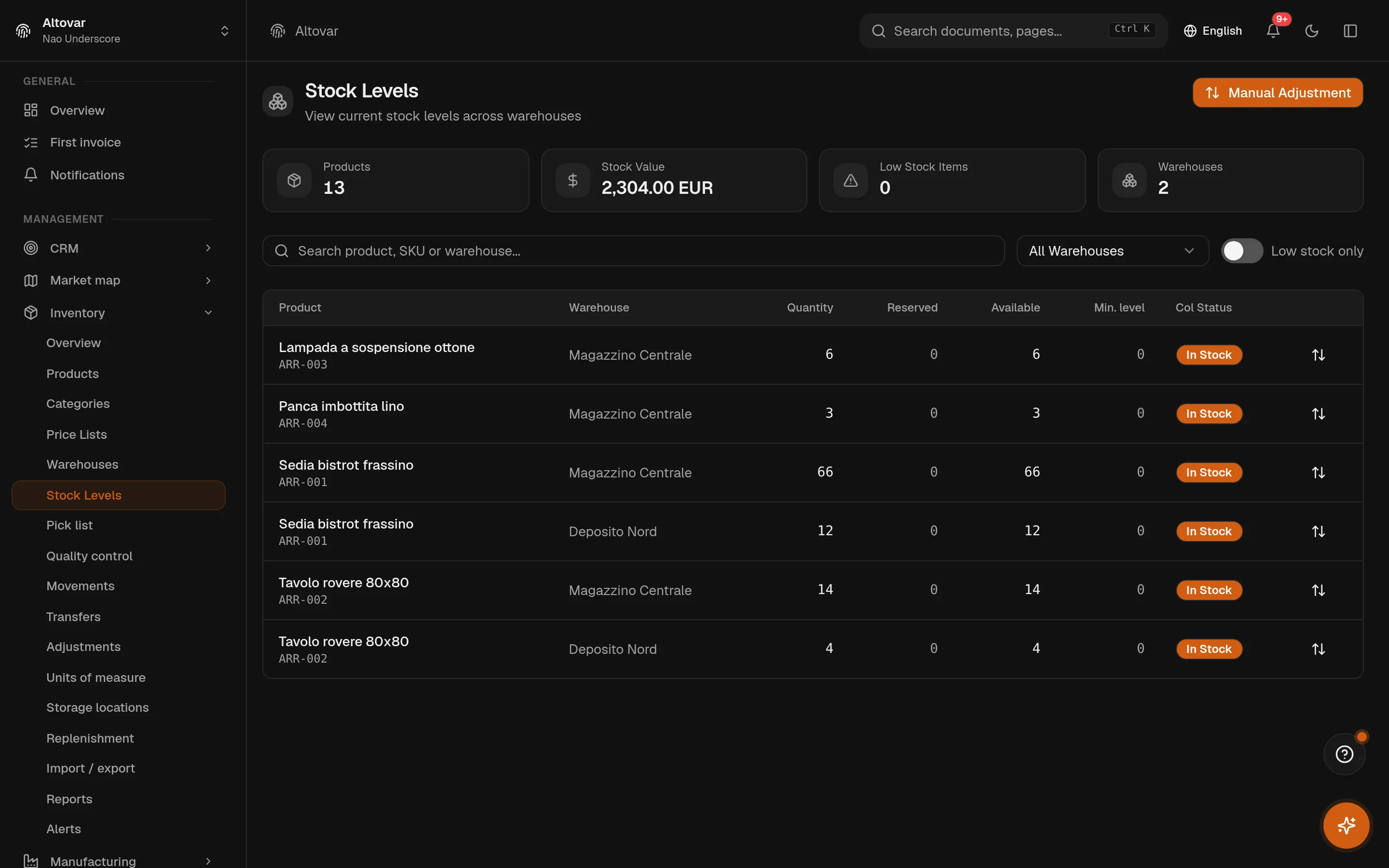
Stock is kept per product, per warehouse, per variant — and underneath, per bin. The stock page shows on-hand and reserved side by side with a low-stock filter; the bins page places every location on the floor plan of the warehouse. When the physical count disagrees with the system, a reconciliation writes the correcting movements instead of silently overwriting the numbers.
A movement for everything
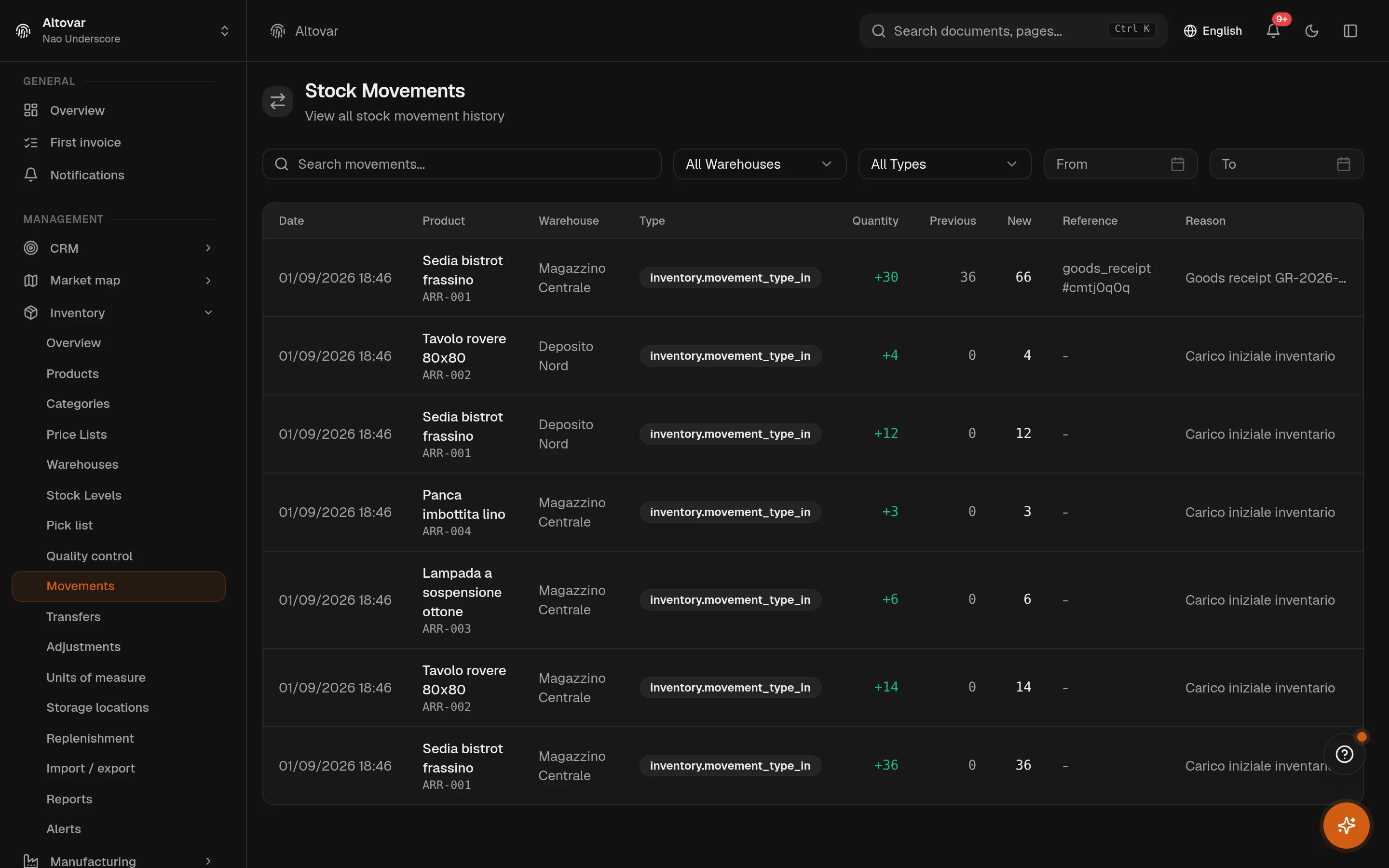
Loads, unloads, corrections, damage, returns, sales, purchases, transfers between warehouses — every change of quantity is a movement with its before and after, its reason, its reference and its author. Transfers are documents of their own, drafted and then processed; adjustments can require an approval before they touch stock. The movements page is the audit trail, filterable by type, warehouse and date.
Reordering that starts calm and can go fast
The reorder page ranks what needs buying by urgency — how far under the threshold, times how long the supplier takes. From there, automation is a dial, not a switch: suggestions only; draft purchase orders prepared for you; an autonomous agent that negotiates within policy; and a hands-off mode that requires an explicit acknowledgement to enable. A daily spending ceiling caps whatever mode you choose.
Count it once, then let it count.
Tell us how your stock lives today — how many warehouses, what a count looks like, where the numbers drift. We will show the module on data like yours, and tell you plainly what it does not do.