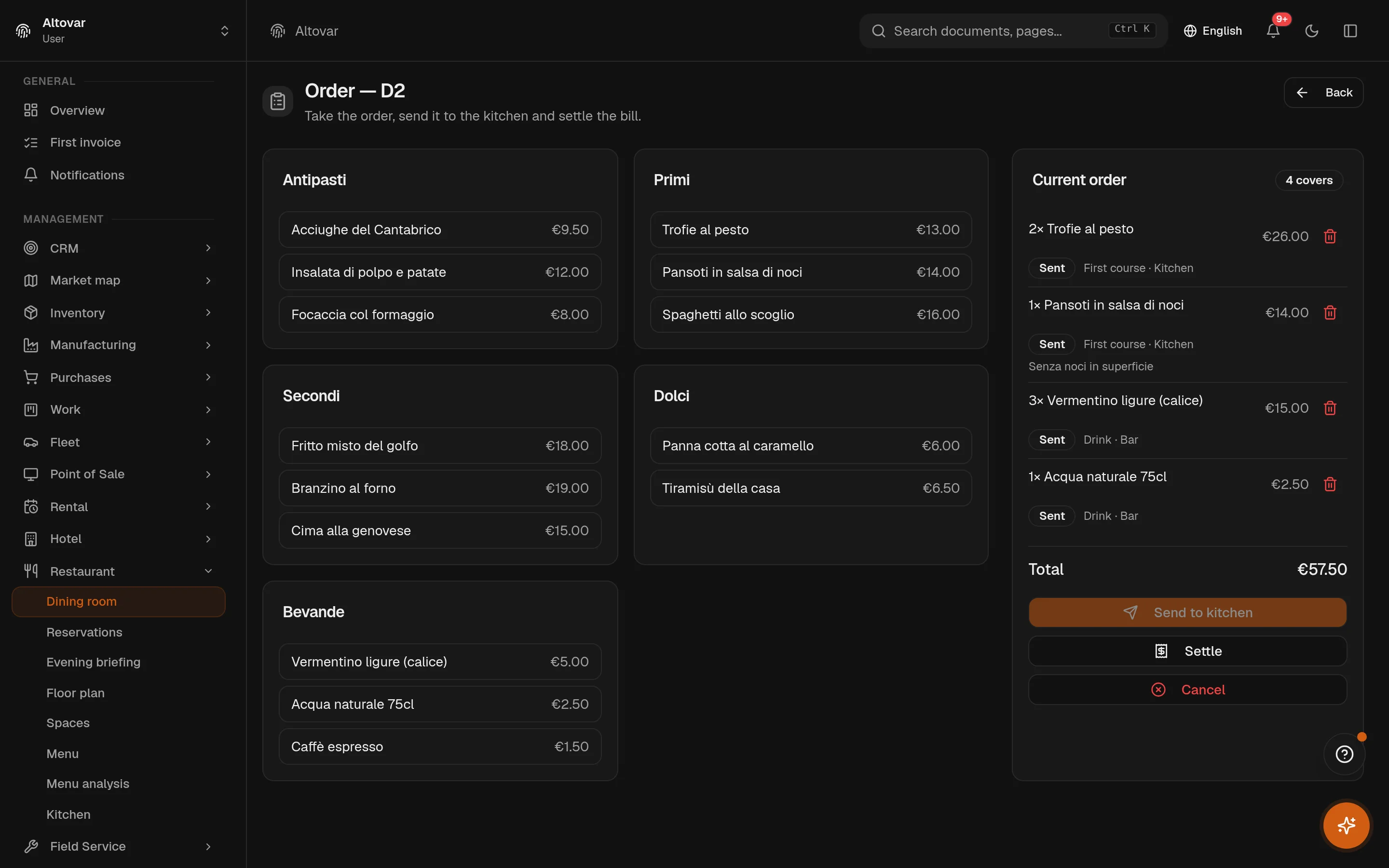
- Order states
- 6 open, sent, partially served, served, settled, cancelled. The order follows the table from the first dish to the till, and the state is what the kitchen and the floor both read.
- Allergens
- The 14 of the EU list every dish carries its allergens from the list the regulation prescribes. The AI can extract them from the ingredients you wrote; the public menu shows them next to the price.
- Stations
- Kitchen and bar each dish has a course — six of them, from starter to drink — and a station. A sent order splits by station, so the bar sees the wine and the kitchen sees the fish.
- Public menu
- Your own address the QR menu lives at a slug you choose, or on your own domain once you verify it. Prices and allergens can be shown or hidden, and each dish can carry its translations.
All the modules Module 08 / 12
From the floor plan to the kitchen.
You draw the room, the waiter takes the order at the table, the kitchen sees it the moment it is sent. The menu is written once and becomes the order pad, the public QR menu and the allergen sheet. Bookings follow the service hours you set, and the bill closes on the till of the same system — nothing is retyped between the room and the accounts.
The order, taken at the table
Open the table, set the covers, pick from the menu by category, add a note per dish — well done, sauce on the side. Send, and the kitchen has it. Dishes can be added to an open order at any time; the bill is settled on the point of sale of the same system, or cancelled with a trace.
A kitchen without shouted tickets
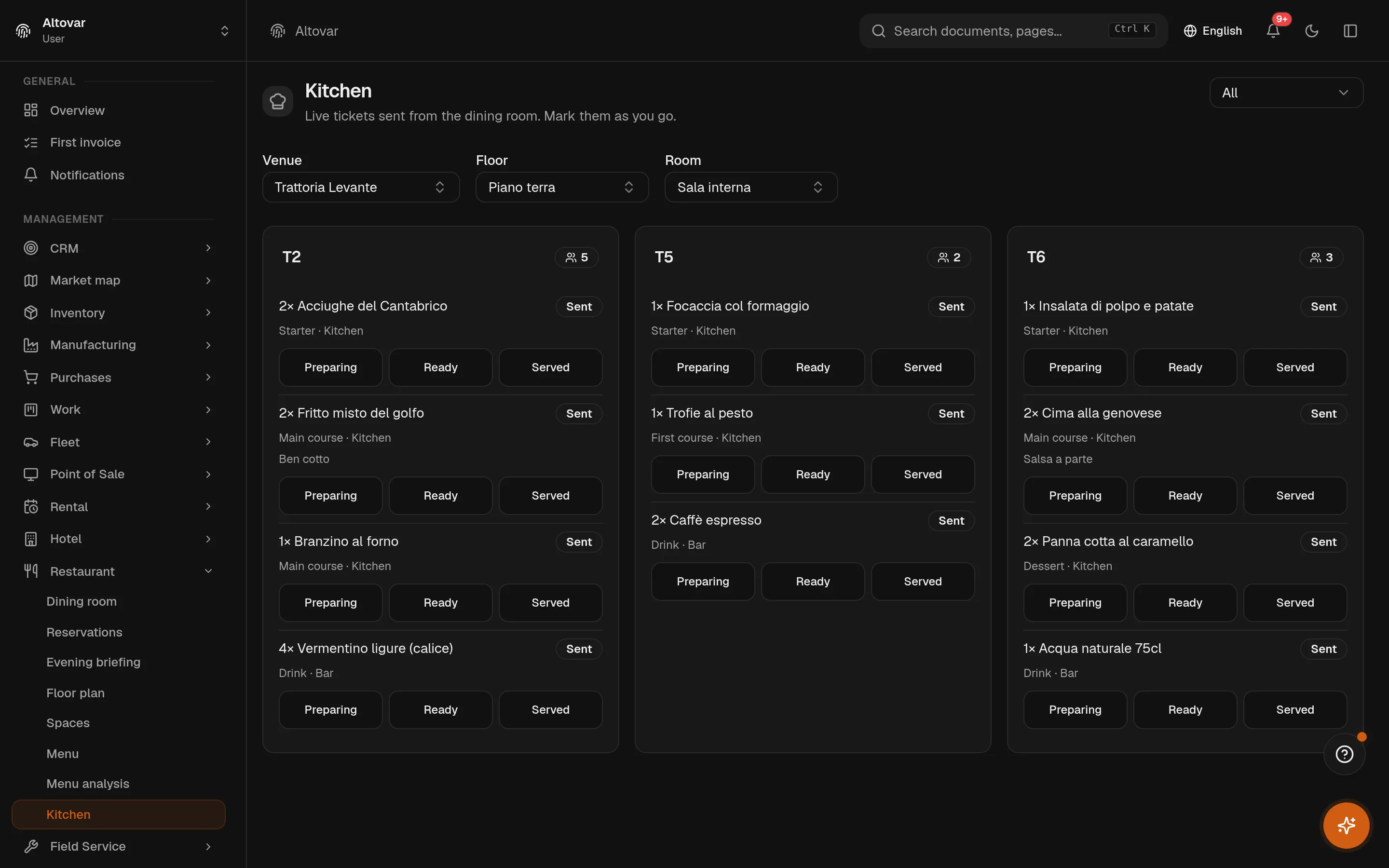
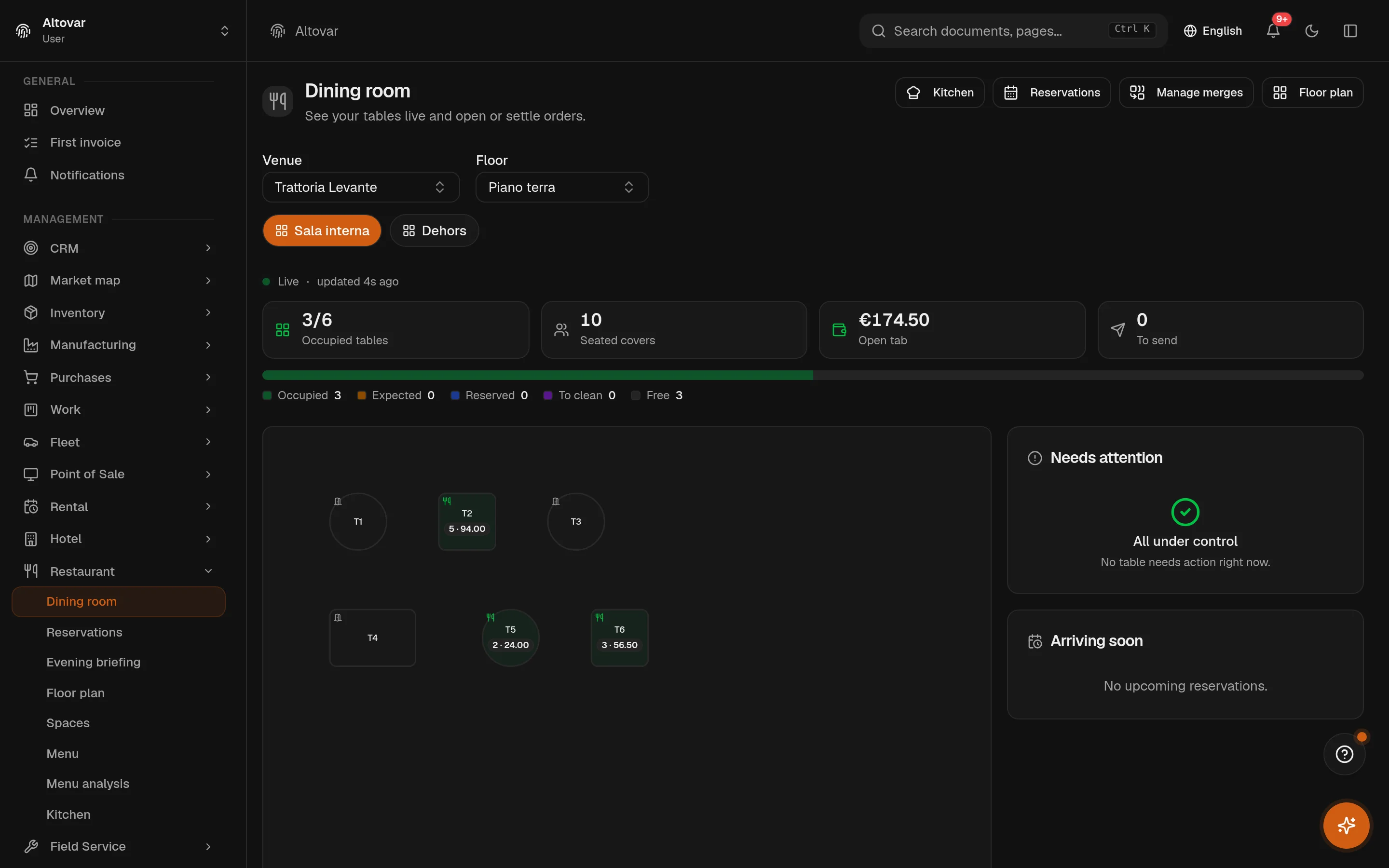
The kitchen screen shows the sent orders of the venue, floor and room you pick, one card per table with the covers. Every line carries the course, the station and the note in plain text, and moves forward on a tap: preparing, ready, served. When the last line is served the order is served; the floor sees it without asking.
One menu, written once
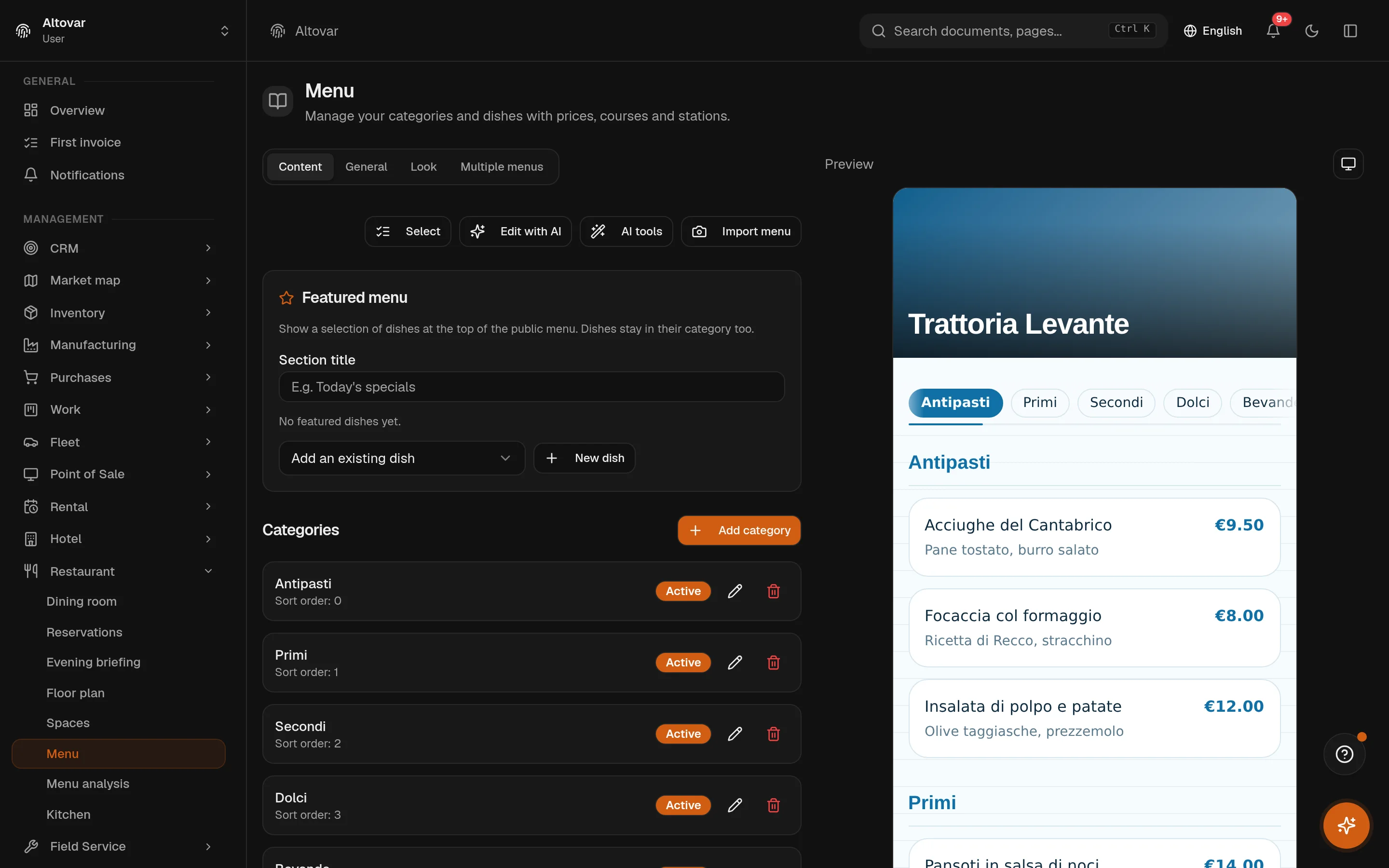
Categories in the order you want, a price per dish or a range, or a price inherited from the category. Each dish has a course, a station, its food cost, its ingredients and its allergens. The preview on the right is the public menu as the guest will see it. The AI writes descriptions, extracts allergens from the ingredients, suggests a price and translates the whole menu; a menu on paper, in a PDF or on a web page can be imported and reviewed before it is committed.
- Featured and multiple menus
- A featured section sits on top of the public menu; several menus can coexist — lunch, dinner, the tasting — each with its own categories.
- Menu analysis
- Popularity against margin, dish by dish, from the orders actually sent — with a plain-language explanation of what the matrix says.
The QR menu, at your address
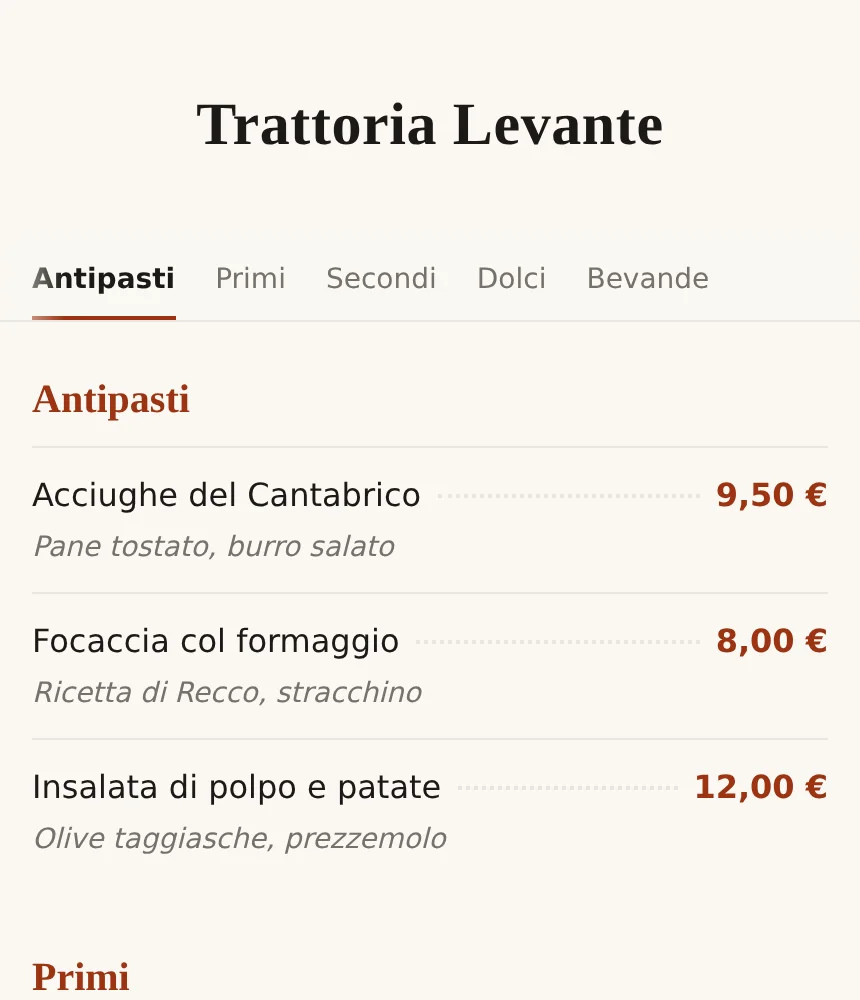
The same menu published at a public address of your choice, with a theme you pick and, if you want, your own domain. Prices and allergens are shown or hidden with a switch; each dish can carry its translations and the guest can switch language. The booking button can sit on the same page.
Bookings that follow your service
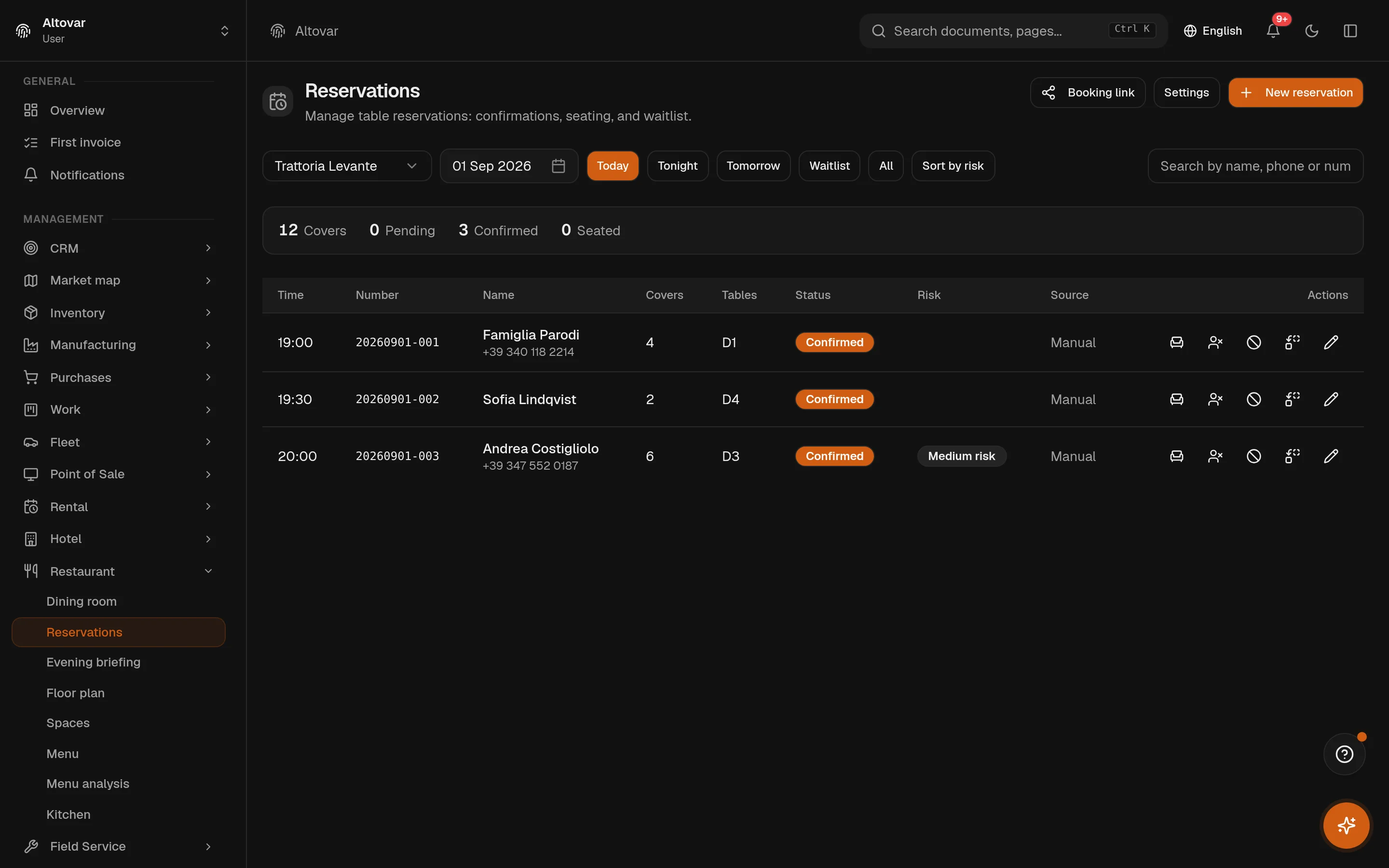
You set the service windows per weekday, the turn time and the step between slots, the booking window in days, the largest party you accept, a cap on covers per slot. The engine only offers slots that fit; a booking that does not fit goes to the waitlist. Confirmation can be automatic, no-shows are marked after the minutes you set, and every booking shows an estimated no-show risk.
- Tables assigned
- The engine assigns tables to a party from the plan; the staff can override, reassign, seat, complete or cancel from the list.
- Public booking
- A booking page and a widget to embed on your site, with the origins you authorise; reminders and the evening briefing go out on schedule.
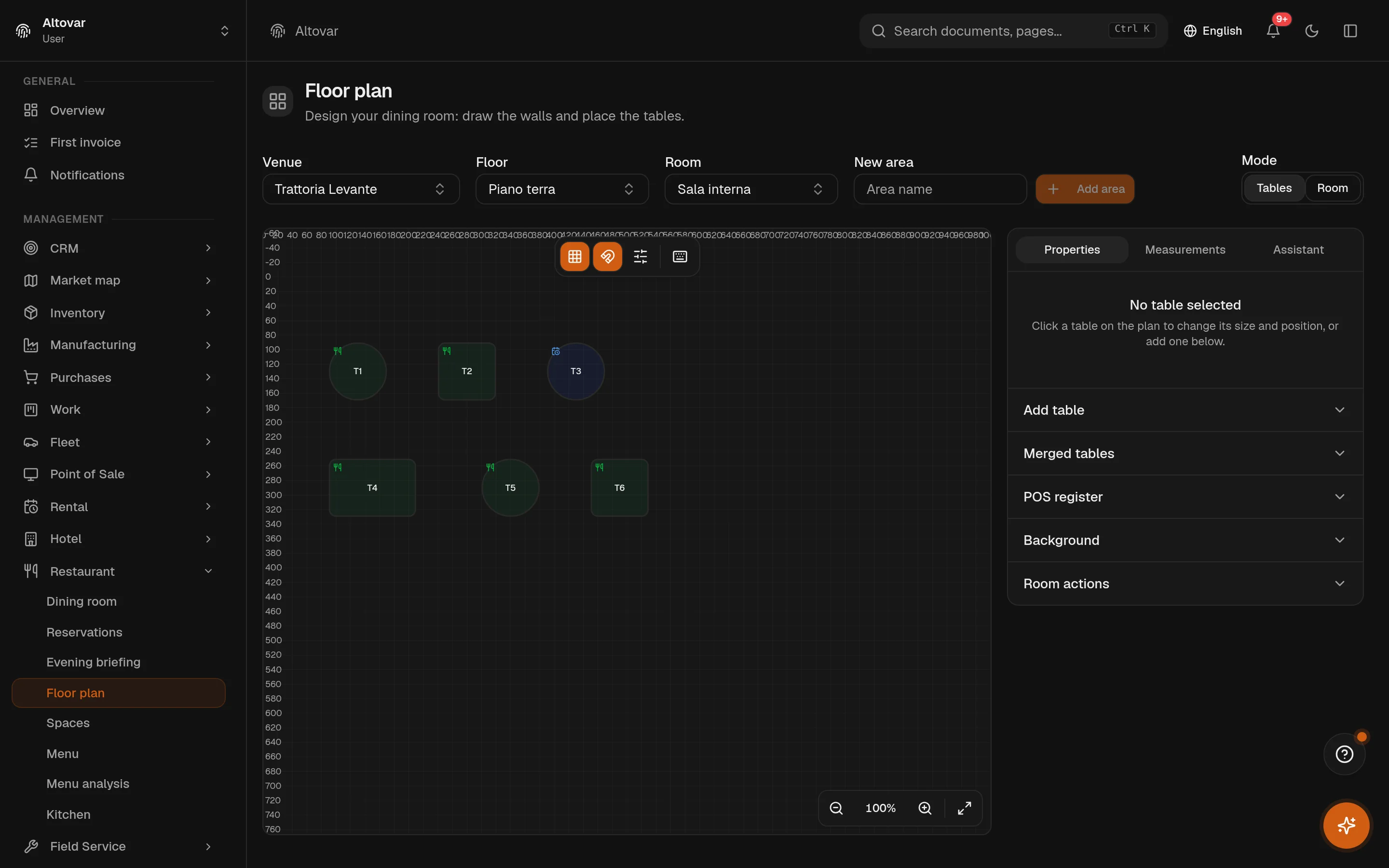
The plan is yours to draw
Venues, floors, rooms, tables: each table has a shape, a size, a rotation and a position on the plan. Save a room as a template and apply it elsewhere, duplicate a floor, put a photo of the room behind the plan. Two tables can be joined for a party and separated afterwards. The AI can draft a layout from a description or from a picture of your plan, and suggest a better one.
Bring the room in.
Tell us how your service runs today — how orders reach the kitchen, how bookings arrive, what the till has to do at the end. We will show you the module on a room like yours, and be straight about what it does not do.